GO
Sorry, but you already have a basket with that name. Please use something else.
Are you sure you wish to delete this basket?()
This action cannot be undone.
Sorry, something went wrong
Please report the problem here.
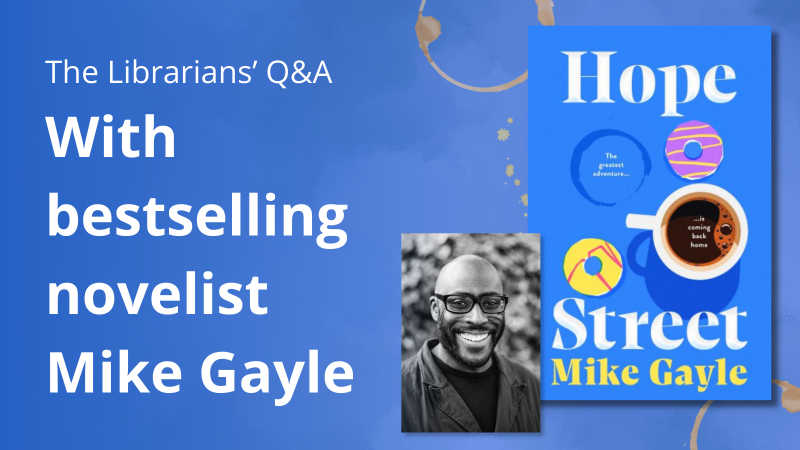
The Librarians' Q&A: with bestselling author Mike Gayle
February 4th 2025
Like you, our librarians love to hear the ins and outs of upcoming books, as well as dive into the minds of our favourite authors. Introducing The Librarians' Q&A, our regular news feature where librarians ask the questions!
We're delighted to feature bestselling Birmingham-based author Mike Gayle. Mike shares with our librarians how his own writing as well as the publishing landscape has changed since his debut hit, My Legendary Girlfriend. Plus, we learn more about his latest book, Hope Street, out on 6 February 2025.
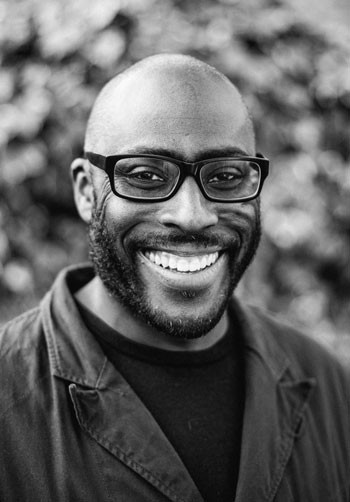 |
Mike Gayle | Author Mike Gayle is a novelist born and raised in Birmingham, UK. Before becoming a full-time author, Mike pursued music journalism and ended up as an agony aunt for teen magazine Bliss. Since then, he has written for The Sunday Times, The Guardian, and Cosmopolitan. He became a full-time novelist after the debut publication of his Sunday Times Top 10 bestseller, My Legendary Girlfriend. To date, Mike is the author of twelve novels and his books have been translated into over thirty languages. |
You’ve been writing books for 26 years. How do you think the publishing landscape has changed in this time?
With the advent of the internet, e-books and the rise of social media it’s a completely different beast. For example, when I first started out, I used to get actual letters from readers forwarded by my publishers in the post! Now any reader can message me directly at any time.
Some of the changes have obviously been for the better, allowing writers and wannabe writers more freedom, but others (I’m talking about you AI) are definitely for the worse!
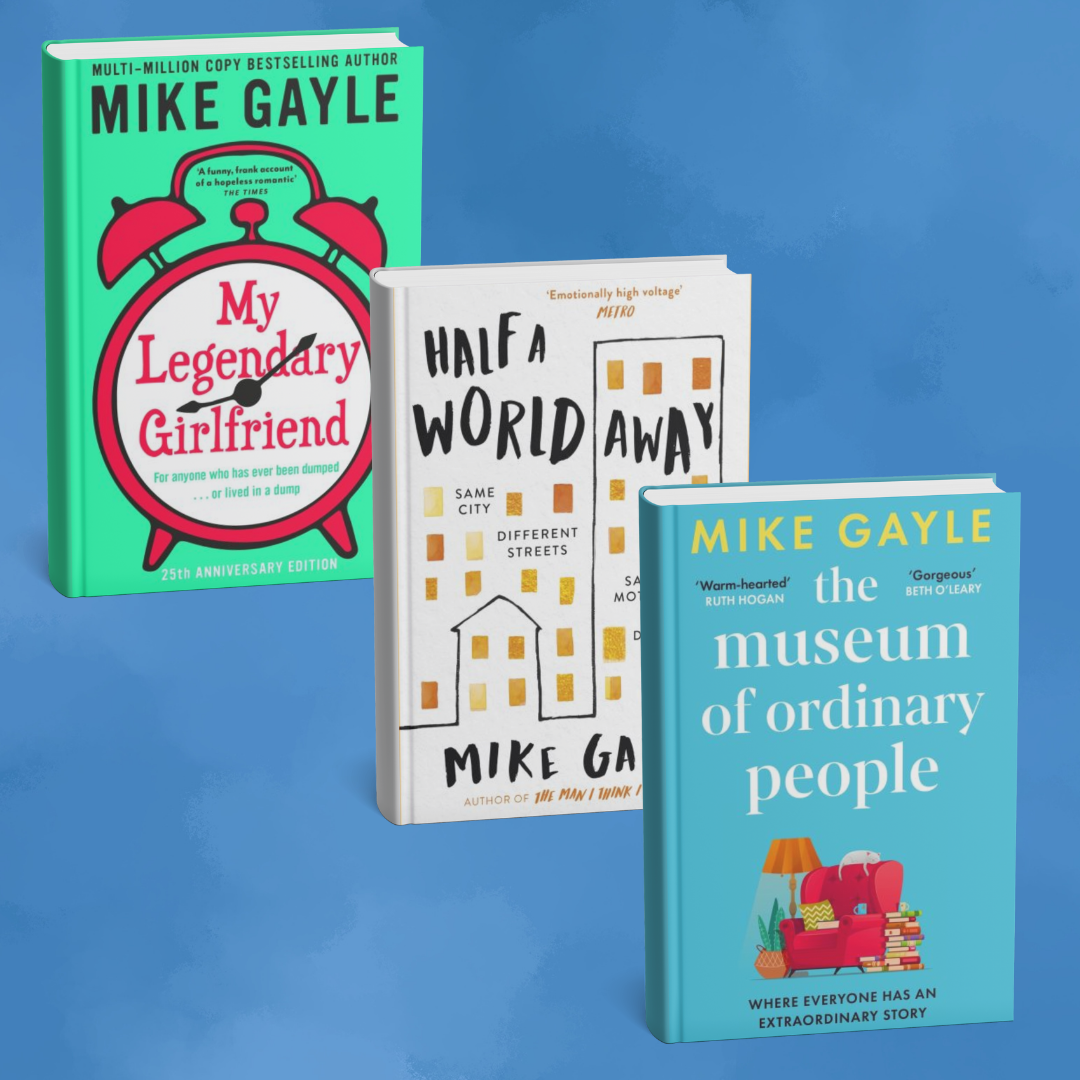
Your first book My Legendary Girlfriend was published in the late 90s. How have the themes of your writing changed since then?
I was 27 when my first book came out and I think the themes of my books back then reflected my concerns and those of my peers, chiefly, relationships and how to make sense of them.
I’m fifty-four now, and while I’m still fascinated by the mechanisms of relationships, my scope is far wider now, taking in not just romantic relationships but familial and platonic relationships too.
You’re known for writing about relationships between men and women – how do you get inside the mind of your characters?
The publication of Half a World Away a few years ago brought with it a new swathe of readers most of whom hadn’t read my earlier work. I’ve lost count of the number of messages I received from female readers who had neglected to read my name on the cover and assumed I was a woman because my portrayal of Kerry seemed so authentic!
I’ve always felt that my job as a writer is to make my characters whether male or female feel real, and the way you do that isn’t just through personal experience, but through observation and imagination too.
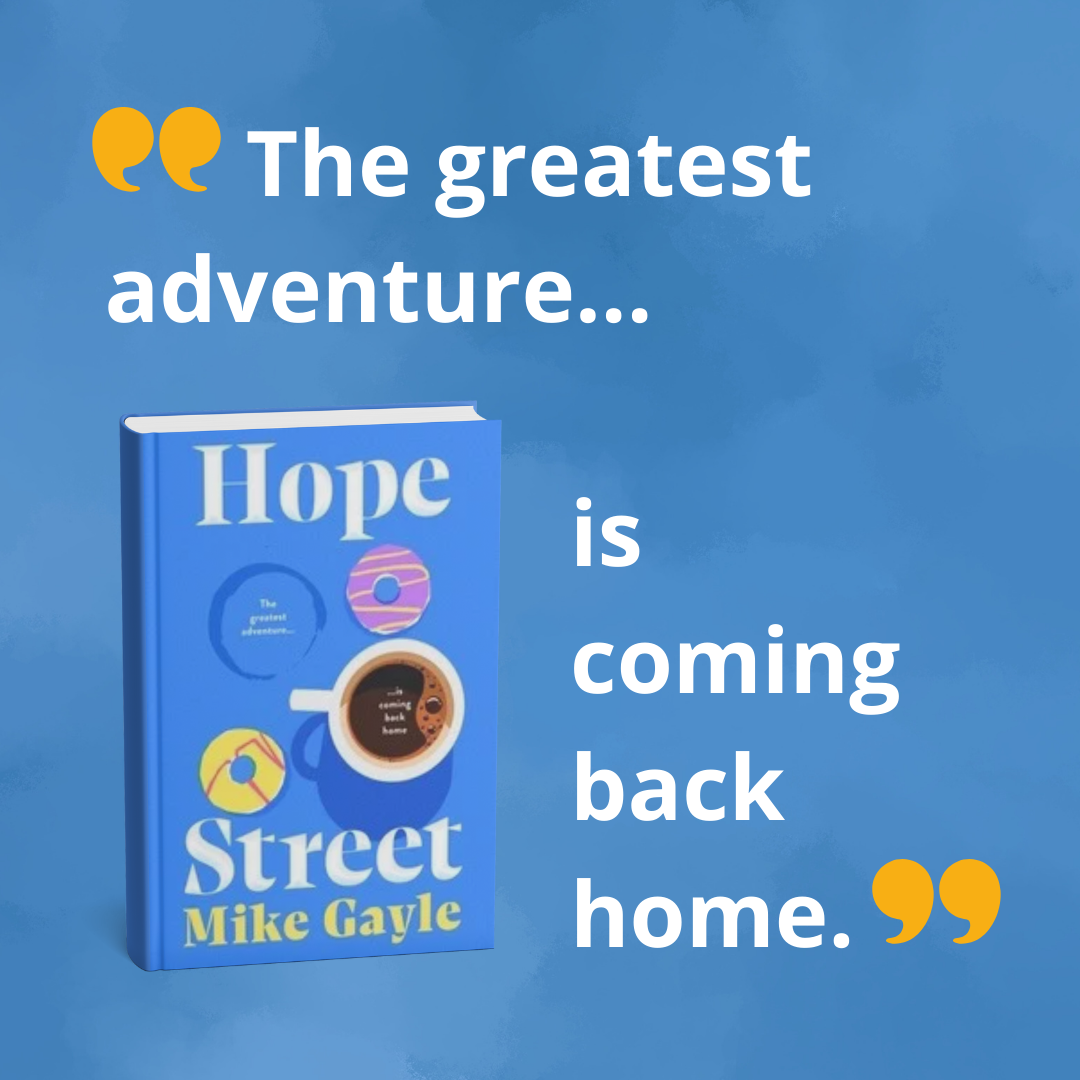
Can you tell us a little bit about your latest book, Hope Street? What was the inspiration for the book?
Hope Street is about a trainee journalist called Lila, who is a bit disillusioned with her job. She’s desperate to do hard hitting news stories that will make a difference but keeps getting handed fluffy puff pieces until one day she’s given an assignment that changes everything. An entire estate has been cleared ready for demolition so a new development can be built but a single person, the last resident in Hope Street, is holding things up. When Lila goes to meet him, she discovers the heart-breaking reason he’s refusing to move: four years ago his Mum left to go shopping and never came back but he’s convinced that one day she will return.
I think we’ve all read stories about people refusing to leave their home and blocking the progress of some development or other, and I couldn’t stop thinking about what might motivate someone to do this and Hope Street is the result.
 What was your relationship with libraries growing up?
I wouldn’t be a writer without my local library. From the age of about seven I was there every single week getting my four books on a Saturday morning, gobbling them up during the week and then going back to get more. Having a well-stocked library meant that I read anything and everything I could get my hands on. It meant that I could try things and see if I liked them.
I think it must have rewired my brain, or at the very least opened my mind to the world of possibilities that existed, and because of that becoming a writer seemed, to a kid like me, a completely natural step to take.
What do you like to read? Are there any other authors who inspire you?
I love reading, and have always got several on the go at once. I’ve just finished Holly Bourne’s So Thrilled For You and Gillian McAllister’s Famous Last Words and enjoyed them both immensely.
To be honest I think all authors inspire me to some degree because whenever I read a really good book, I feel like it spurs me on to be a better writer myself.
How do you decide where to set your stories? (And will you be writing another novel set in Birmingham...?)
I try my best to set novels away from the capital because London has enough London based novels to last a lifetime! I think it’s important that places apart from London get a look in, and over the years as well as Birmingham, where I’m from, I’ve set books in Coventry, Manchester, Brighton and Nottingham to name but a few. Hope Street is set in Derby, mainly because I really like it there and I haven’t read a novel set there in years.
I think it’s culturally important that everyone everywhere gets to read fiction set in places they recognise, so that they can properly feel a part of the narratives we use to make sense of the world.
Will I write another book set in Brum? Hopefully!
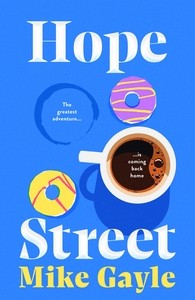 |
Hope StreetLila Metcalfe is a trainee journalist in Derby and she's very used to being given the stories that no one else wants. So, when her editor tells her that the city's Cossington Park development is being held up by a solitary resident on Hope Street who is refusing to leave, she knows she is going to be the one sent to find out more. And that's how she meets Connor. |
Back to news and blog...
- hello@peters.co.uk
- 0121 666 6646
- Send a message
- Meet the team
- Peters Ltd
- 120 Bromsgrove Street
- Birmingham
- B5 6RJ