GO
Sorry, but you already have a basket with that name. Please use something else.
Are you sure you wish to delete this basket?()
This action cannot be undone.
Sorry, something went wrong
Please report the problem here.
National Year of Reading 2026: What does it mean to be a reader?

March 17th 2026
A reader is anyone who engages with words and stories in ways that matter to them, yet many people still feel excluded from that identity. Following our recent Library Lounge discussion on what makes a reader, this blog explores what it means to be a reader in the context of the National Year of Reading 2026, and how libraries can help more people see themselves that way.
What does a reader “look like”?
When we ask people to define a reader, familiar phrases appear: someone who reads voluntarily, a curious thinker, a person who reads for interest or enjoyment. Many of us can picture that stereotypical scene: a wingback chair, a roaring fire, a person lost in a book for hours. For some, that image is comforting. For others, it is alienating. If you don’t read in long, quiet stretches, or don’t want to, it can feel as if you don’t qualify.
There are also powerful social ideas about who counts as “a reader.” Children and adults who do not see their race, culture, language, disability or interests reflected in books may quietly decide that reading, as it is presented to them, is “for other people.” When that happens, the label “non reader” can stick for years.
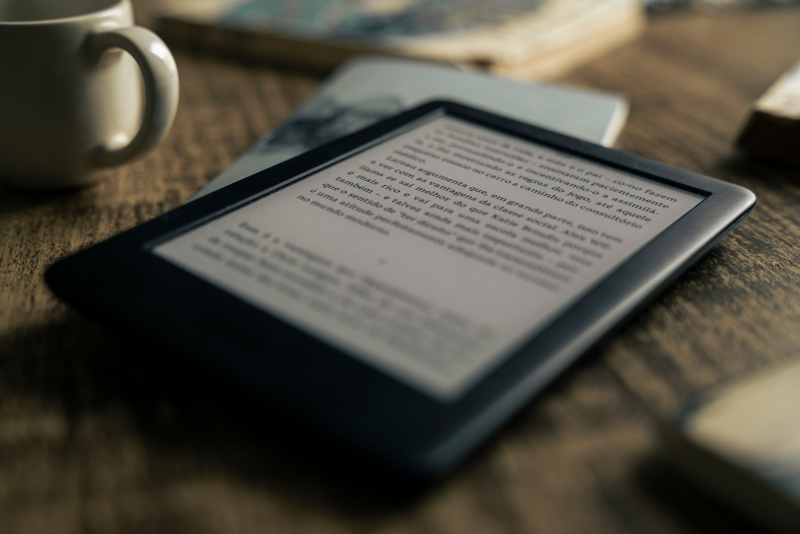
Format, access and inclusionBehind the simple question “what is a reader?” lies a more complex one: “what counts as reading?” Is it only printed books? Do graphic novels, audiobooks, ebooks, subtitles and in game text count? Many of us working in and around libraries have had to advocate repeatedly that, yes, graphic novels and audiobooks are reading; yes, reading on a screen is reading; yes, symbol-supported text and braille are reading. But broadening the definition raises its own questions. If we say “as long as words are involved, you are reading,” where does that leave wordless picturebooks, which many children and adults experience as deeply as any written story? If we insist that story is the key, what about the passionate non-fiction reader who only ever chooses information books? And if someone reads mainly as a route to something else – to play a game, follow subtitles or take part in a hobby – are they still a reader, or “just” someone who happens to read? These questions are not merely theoretical: they shape who feels welcomed into the reading community and whose reading practices are dismissed as not quite “good enough.” |
 |
Habits, identity and who gets to decide
One useful lens comes from research on habit-building: make reading obvious, attractive, easy and satisfying. For libraries, that might look like:
• Making reading obvious by ensuring books and stories are visibly present in many spaces, including digital ones.
• Making it attractive by treating books as entertainment as well as education, and by showcasing a truly diverse range of formats and voices.
• Making it easy through accessible formats, clear signposting, flexible borrowing, and strong links with schools and community groups.
• Making it satisfying by helping people find material that speaks to them at the right level of challenge, whether that is poetry, manga, audio, romance, non fiction or anything else.
Even then, a question remains: can you have a strong reading habit without feeling like a reader? And who has the authority to confer that identity – professionals, peers, families, or the individual themselves?
Many of us working in reading promotion have personal stories that illustrate how fragile that identity can be. You can grow up seeing yourself as a reader and still be made to feel “not enough” because you are reading the “wrong” things, not reading currently, or simply don’t have a bookcase visible behind you on a video call. If that is true for confident readers inside the book world, how much more tentative might it be for those on the edges.
Children, adults and the pressure around reading
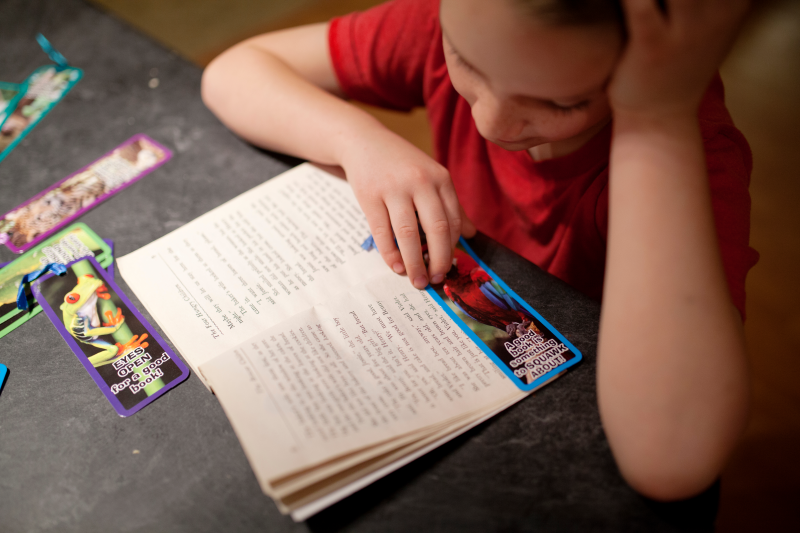 |
We often talk about readers as people who choose to read purely for pleasure, but that ideal sits uneasily with many children’s lives. School expectations, homework, social media and other forms of entertainment all compete for their time and attention. Adults, too, may only find space to read on holiday or in brief snatches on a commute. Does that make them “less” of a reader? Many children describe themselves as non-readers simply because they don’t read the books they think adults want them to read. They may be devouring manga, game guides, comics or online fiction, yet still feel they are failing some invisible standard. Librarians are often very good at validating these choices; the challenge is ensuring that teachers, parents and carers do the same, recognising the long term impact that validation has on reading identity. There is also a cultural tendency to see books as worthy rather than entertaining – something that must deliver a message or a lesson. If reading always feels like an assignment, it struggles to compete with television, games and social media on the simple metric of fun. |
The National Year of Reading: recentering reading
The National Year of Reading offers a timely opportunity to rethink who and what we mean when we say “reader.” Its aims include reconnecting people of all ages with reading as a meaningful, modern and social activity, and changing habits so that more people come to see themselves as readers over time. At the same time, it raises an interesting dilemma: can we rebrand reading if reading is not at the centre?
Many current initiatives hook into other interests – gaming, crafts, film, hobbies – and use reading as a route into those worlds. For some, this feels like a necessary doorway; for others, it prompts questions about whether reading has been relegated to a supporting act. If we constantly frame reading as a way to get somewhere else, will people ever value it for its own sake?
This is not a call to abandon creative programming. Rather, it is an invitation to keep asking: where is reading in this activity? How clearly can participants see themselves as readers, not just as gamers, crafters or fans who happen to skim some text along the way?
How libraries can help people identify as readers
For librarians, library assistants and teachers, the National Year of Reading is an invitation to keep widening the doorway while keeping reading at the centre. In practice, that might mean:
• Curating up to date, genuinely diverse collections where people can see themselves and their interests reflected, in multiple formats.
• Explicitly validating a wide range of reading choices, from manga and graphic novels to audiobooks, digital texts and information books.
• Designing events and “big reads” that are social as well as solitary, and that welcome people in at many different levels of confidence.
• Using language that helps people claim the identity – telling a child who reads game guides, “You are a reader,” or an adult who only reads on holiday, “You are still a reader.”
• Reaching beyond current users through outreach, partnerships and creative programming, to listen to those who do not yet come through the door.
Perhaps the most important work we can do this National Year of Reading is to keep asking, in our own contexts: who is missing from our picture of a reader, and what might they need from us to step into that picture?
- hello@peters.co.uk
- 0121 666 6646
- Send a message
- Meet the team
- Peters Ltd
- 120 Bromsgrove Street
- Birmingham
- B5 6RJ