GO
Sorry, but you already have a basket with that name. Please use something else.
Are you sure you wish to delete this basket?()
This action cannot be undone.
Sorry, something went wrong
Please report the problem here.
Reading for mental health - Abi Lown at St Laurence School
July 6th 2020
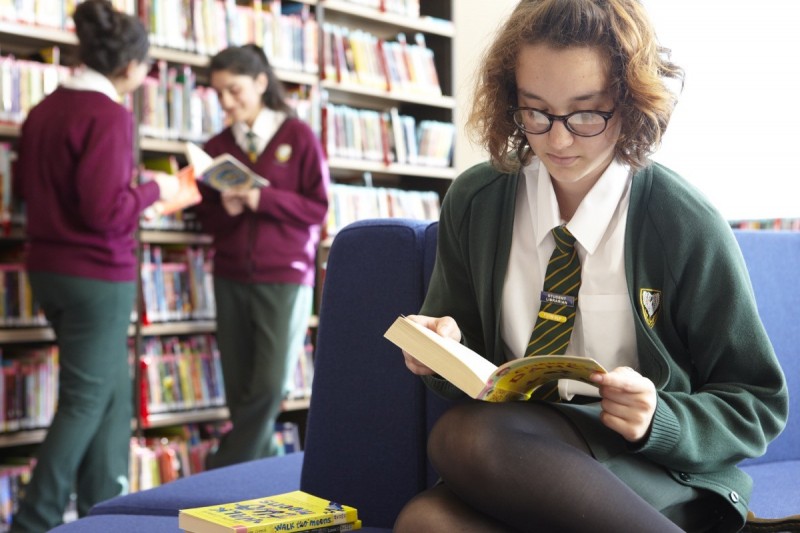
This guest post is from Abi Lown, Librarian at St Laurence School in Bradford-upon-Avon.
Bibliotherapy, or reading to support health and well-being, has been recognised since the turn of the last century but has recently gained more attention. I suspect a lot of us already use reading this way in some form, either for escapism, to walk in someone else’s shoes, or experience a sliver of life you’d never get to see.
Lockdown life and the ‘new normal’ (my potentially least liked phrase of 2020) have both had massive impacts on mental health, our understanding of our place in the world and caused uncertainty and anxiety about the future. There have been predictions that our response to the Covid-19 pandemic will cause an epidemic of mental health issues coming to the surface for adults and children alike. So what better time to consider how our reading can support our own mental health and that of the children and teenagers we know?
All of us, in some way, want to know that our experiences are valid and understandable and this is especially true of teenagers. The transition from child to adult can be lonely at the best of times. Lockdown and the Covid-19 pandemic have made this all the more obvious with potential mental health issues exacerbated by strained family relationships, illness, possible bereavement and enforced separation from friends and peers. It’s easy to see how, like many of us, the circumstances of life can take a toll on mental health.
Even for those without mental health issues themselves, increased awareness and empathy can only be beneficial. Reading about how characters with mental health issues act and react to life is a great way to increase knowledge and understanding, and to recognise when either ourselves or those around us are struggling. Admitting things aren’t always easy is the best first step to asking for help and reaching out for support.
Only by talking and recognising the stigma is it possible to also acknowledge that this is only part of someone’s experience. As Emma Smith-Barton says of her main character in The Million Pieces of Neena Gill; ‘She is anxious, like many of us. But she’s also so much more than that. She is brave and kind, creative and intelligent, and she has courage and strength that she didn’t know she had. This illness is not her whole story: it does not define her.’
This list suggests titles in five different categories that can support us all to better understand mental health and wellbeing issues amongst teens, as well as allowing teens themselves to explore those issues in the safe and contained environment of a fiction novel.
If you, or someone you know, is experiencing mental health issues, know that you are not alone and that there is a whole network out there willing to support you. It’s ok not to be ok.
Anxiety
The Perks of Being a Wallflower – Stephen Chbosky
Holding Up the Universe – Jennifer Niven
The Million Pieces of Neena Gill – Emma Smith-Barton
Bullying
We are all made of molecules – Susin Nielsen
Depression
Beautiful Broken Things – Sara Barnard
Playlist of the Dead – Michelle Falkoff
All the Bright Places – Jennifer Niven
Grief
The House with Chicken Legs – Sophie Anderson
Year of the Rat – Clare Furniss
A Monster Calls – Patrick Ness
My sister lives on the Mantlepiece – Annabel Pitcher
OCD
Am I normal yet? – Holly Bourne
All the things that could go wrong – Stewart Foster
The Rest of Us Just Live Here – Patrick Ness
The Goldfish Boy – Lisa Thompson
Abi Lown is a Chartered Secondary School Librarian at a large comprehensive in rural Wiltshire. She has spent the last 6 years there persuading children and teenagers what they should read and why, picking their brains for her next read and drinking excessive amounts of tea. For more book talk and recommendations follow her on Twitter @AbiLown.
- hello@peters.co.uk
- 0121 666 6646
- Send a message
- Meet the team
- Peters Ltd
- 120 Bromsgrove Street
- Birmingham
- B5 6RJ