GO
Sorry, but you already have a basket with that name. Please use something else.
Are you sure you wish to delete this basket?()
This action cannot be undone.
Sorry, something went wrong
Please report the problem here.
Addressing gender bias in KS3 English: our favourite books by female authors
September 21st 2022
“We now recognise that the culture we produce needs to be representative of the society in which we live; it needs to be diverse, inclusive and move away from representing a white, male viewpoint as the normative experience. We recognise this because we understand it is damaging for people to never see themselves reflected in what they read.”
Balancing the Books: Gender bias in the KS3 English Curriculum report
This is an extract from the Balancing the Books report, published earlier this year by the End Sexism in Schools campaign, which reveals that women’s voices are severely underrepresented in the Key Stage 3 (KS3) English curriculum and reading schemes for schools.
Lack of female representation
We know that schools are all too aware of the importance of having books about diversity to represent a wide range of ethnic backgrounds, cultures and experiences, yet discussion around male and female representation has been less of a focus for debate, particularly at Key Stage 3. The report shows that a staggering 82% of novels taught at Key Stage 3 feature a male protagonist and 99% of plays taught are written by men.
Drawing on data from 891 schools, the Balancing the Books report shows that while women make up 51% of the population, 77% of schools teach only one or no whole texts by female writers. In every year group at KS3, there is a 75/25 split in the choice of male/female authored novels, according to the report, yet 43% of female authored novels are optional so they are even less likely to be taught. Using data from school websites and Freedom of Information requests, the report looks at which texts are mandatory (i.e. the only choice on a curriculum) and which are optional (i.e. texts which are one of several options teachers choose from).
The results reveal a pattern of female authors being taught in poems, extracts from longer works, short stories and speeches but rarely in whole novels and plays. The report says: 'At least half – and most likely considerably more – of all school pupils will spend their entire education never studying a whole text by a female writer, and most will never study a text with a female protagonist. This marginalisation of women’s voices is a situation that cannot be allowed to continue.'
How is the KS3 English gender bias affecting pupils?
According to the Balancing the Books report, the white male voice dominates the English curriculum to the detriment of pupils who experience a limited range of perspectives that reinforce patriarchal norms. Ofsted’s 2021 report into widespread sexual harassment and misogyny in schools found that boys have a sense of ‘superiority’ that makes them feel they can treat girls as they wish.
And the End Sexism in Schools campaign says that the invisibility of women in the literature boys read is directly linked to the sexual harassment of girls. Its report states: 'Studying a diet of Dickens, Orwell, Steinbeck and Shakespeare leaves both boys and girls with no positive female role models, no examples of female literary genius and no opportunity to discuss a female perspective of the world. Schools need to recognise the importance of equalising their curriculum and treat it as a priority.'
Why are schools slow to introduce more female-led inclusive books?
Despite schools’ best intentions, redressing the gender bias in book packs for schools, specifically for KS3 English has been slow for several reasons:
- Schools are concerned that boys (who are often reluctant readers) won’t engage with female-led books so tend to keep teaching books with male protagonists and themes.
- Teachers are busy, have limited time and need to be familiar with a text to teach it well so there is a tendency to stick to old favourites.
- Children’s books are dominated by male protagonists so there is a shortage of female-led books. A recent US study of children’s books published in the last 60 years found that male perspectives and main characters still outnumber female. The analysis suggests that while a higher proportion of books now feature female protagonists, male protagonists are 'persistently' overrepresented.
What can be done to redress the gender imbalance?
The End Sexism in Schools campaign wants the government to overhaul the curriculum to create an equal space for women’s achievements, voices and experiences alongside men’s that will encourage boys to value and respect women’s contribution to literature, culture and history.
The campaign also wants to work with teachers, authors and schools to help schools easily make improvements to the gender diversity of their curriculum. For meaningful change to happen, the campaign recommends:
- Ofsted needs to inspect schools to assess their commitment to gender equality and the content of their academic curriculum
- The Equality Act should be amended to include curriculum content
- Exam boards need to overhaul their set text lists to ensure a 50/50 split of male/female authors and 50/50 male/female protagonists
- Schools should work towards a 50/50 gender equal split in the authorship and protagonists of the texts they teach
- Schools need an additional budget to gender equalise their curriculum with more planning, preparation and assessment time for teachers to prepare new material
- Initial teacher training providers need to offer more dedicated subject-specific teaching on diverse literature and support trainee teachers in developing their subject knowledge
How to introduce more female authors and perspectives
According to the KS3 English curriculum, pupils should be taught to read a wide range of fiction and non-fiction including whole books, short stories, poems and plays with a wide coverage of genres, historical periods, forms and authors. The range should include high-quality works from:
- English literature, both pre-1914 and contemporary (including prose, poetry and drama)
- Shakespeare (two plays)
- Seminal world literature
And pupils should be encouraged to choose reading for pleasure independently for challenge, interest and enjoyment.
Our experts' recommendations
Salt to the Sea by Ruta Sepetys
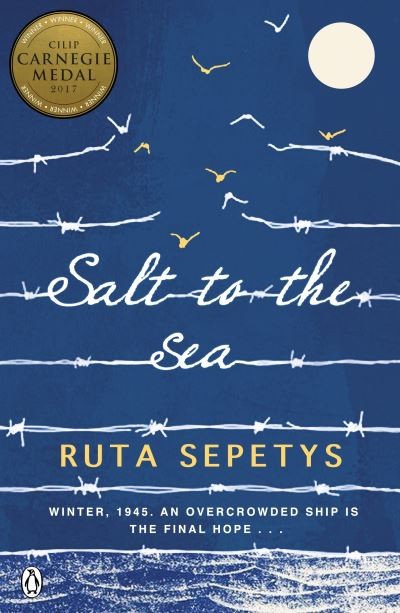
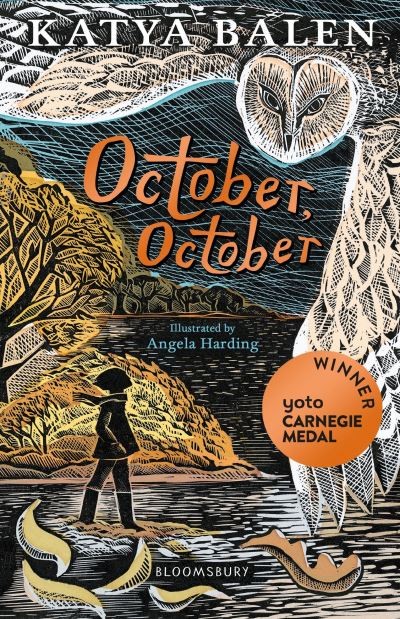
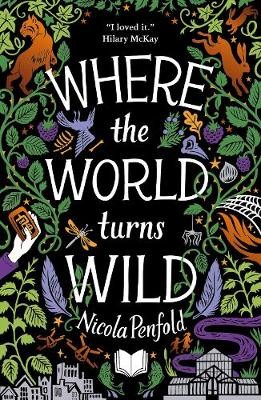
Find our full KS3 English book list here.
Useful links
- hello@peters.co.uk
- 0121 666 6646
- Send a message
- Meet the team
- Peters Ltd
- 120 Bromsgrove Street
- Birmingham
- B5 6RJ