GO
Sorry, but you already have a basket with that name. Please use something else.
Are you sure you wish to delete this basket?()
This action cannot be undone.
Sorry, something went wrong
Please report the problem here.
Which book and why? The importance of guided reading
September 28th 2021
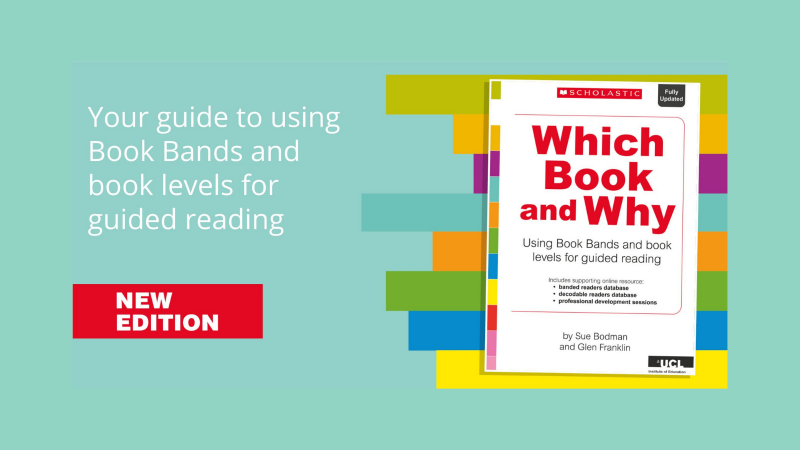
Scholastic recently released a new edition of Which Book and Why, the definitive guide for teachers looking to achieve effective guided reading for children aged between four and seven.
“We want all children to love to read! This has to be the ultimate goal of reading instruction in school. As teachers, we have the responsibility to make learning to read a purposeful and pleasurable experience.”
(Which Book and Why: Using Book Bands and book levels for guided reading, Scholastic, 2021)
But how do we go about this?
In light of this popular guide being re-released, we take a look at some of the benefits of guided reading and suggest some tips for getting the most from your guided reading sessions.
What is guided reading?
Guided reading is a teaching method which involves educators working with small groups of children who have similar levels of reading ability. They take it in turns to read aloud with teachers asking questions or prompting to develop and improve comprehension.
Although guided reading sessions will depend on the group of pupils, their individual abilities and the primary teaching focus, there are certain aspects that stay the same. Lesson structure, group instruction, interaction around text reading, use of assessments and focused teaching are the core elements within this teaching method.
This means all lessons will consist of three sections - before reading, during reading and after reading. A group will include readers at similar levels and with similar interests, and usually between four to six students.
As part of the learning experience, teachers will ask questions and support readers to develop their reading skills and strategies and to help with text selection, formative assessments are used to inform and provide guidance for on appropriate books. Additionally, each guided lesson will have specific teaching focus with the selected text chosen to support this.
What are the benefits of guided reading?
Guided reading has benefits for both pupils and teachers alike. Among other things these include:
For teachers…
The ability to adapt teaching to different reading levels
Rather than a ’one text fits all’ approach, guided reading allows you to work with different groups in a way that best suits the level your pupils are at.
The opportunity for accelerated development
When readers are instructed in small groups, it allows for teaching to be more focused on their individual needs. It becomes easier to identify areas for improvement where children may be weaker and allows you to establish the best way to strengthen their skills where needed.
For children…
It can encourage a joy of reading
By ensuring guided reading is manageable and achievable, this increases the chance of children not only enjoying the process but effectively developing their reading skills and (hopefully) a love for reading.
It improves comprehension, fluency, word recognition and expands vocabulary
With the added support and appropriate questions from their teacher, children will be able to check their understanding and have the opportunity to build their knowledge and reading skills. As a result they can gain more enjoyment from the text, build their confidence and feel a sense of achievement.
So, how can you ensure you and your pupils get the most from your guided reading sessions?
Take a look at the tips below, and scroll down to find out more about Which Book and Why or to access links to some suggested Guided Reading lists that our team have put together.
3 tips for getting the best from your guided reading sessions
- Be prepared – schedule enough time for your session so that readers don’t feel rushed and you have ample opportunity to work through questions and discuss the text.
- Be Focused – Get clear about your aims for the session, use your assessment notes to guide planning and align activities for all three parts of the lesson as mentioned above. Keep things simple and easy to follow.
- Be Inspiring – remember to consider the group you are working with. What are their interests? What reading level are they at? What will challenge them but not be too difficult? Select engaging texts, suited to them that they’ll naturally be drawn to and excited by. This can lead children to seek out similar books or subjects to read about.
What to expect from Which Book and Why?
Who is the book for?
The book is written for class teachers, intervention and support teachers, or anyone assisting with guided reading. It’s primarily targeted at those working with children from aged from 4 to 7.
What are the key aims of the book?
Which Book and Why aims to:
- support educators in delivering effective guided reading
- explain how guided reading fits with theoretical understanding of how children learn
- describe how guided reading works in practice
- explain both the similarities and differences to guided reading lessons
- help educators choose the right books at the right time based on focused assessments
- provide guidance for school professional development sessions or self-study
- support educators to make the best use of the independent learning opportunities for the rest of the class
‘With knowledge of the children and the text, the teacher can offer just the right level of support to enable all of the group to read the text independently – this is the aim of guided reading.’
(Which Book and Why: Using Book Bands and book levels for guided reading, Scholastic, 2021)
Order Which Book and Why
Guided reading book suggestions
When was the last time you reviewed guided reading in your school?
If you haven’t considered this recently then now is a great time to take a look at our Guided reading page to see which books are available for use in the classroom. There are recently updated lists that cover books you can use for guided reading at both Key Stage 1 and Key Stage 2, including scheme and non-scheme ‘real’ reads. All the books listed are also book banded to help with selection.
Our team of curriculum specialists are also available to advise on guided reading and choosing the best books for your pupils. Email hello@peters.co.uk or call us on 0121 666 6646.
- hello@peters.co.uk
- 0121 666 6646
- Send a message
- Meet the team
- Peters Ltd
- 120 Bromsgrove Street
- Birmingham
- B5 6RJ