GO
Sorry, but you already have a basket with that name. Please use something else.
Are you sure you wish to delete this basket?()
This action cannot be undone.
Sorry, something went wrong
Please report the problem here.
We Were Wolves by Jason Cockcroft: The genesis of the story
May 6th 2021
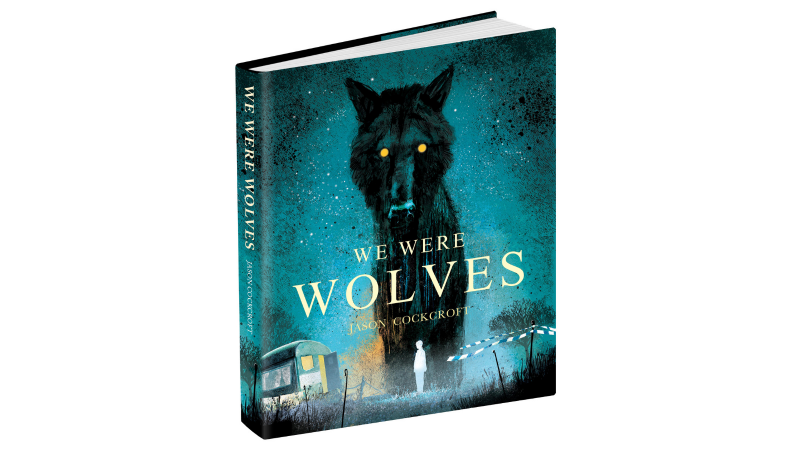
Boy lives in a caravan on his own in the woods. His dad, John, is in prison and promises to get out soon. All the boy needs to do is survive alone for a little while longer. But dark forces are circling - like the dangerous man in the Range Rover, who is looking for his stolen money. And then there are the ancient forces that have lain asleep in the woods for an age... Tense, sparse and darkly beautiful, Cockcroft’s story of a boy in a caravan at risk from both human and animal predators mingles social commentary with myth and folklore with bewitching results.
Author Jason Cockcroft explains the origins of the story in his new book, We Were Wolves.
Often, when I write, a story will begin with a single image. In the case of We Were Wolves, it was of a boy of around fifteen, heating water for tea over a fire at the edge of woodland, having just buried his father. I didn’t know who the boy was or how the father died. I only knew they had been living an isolated life together. I also knew that the father’s death would prove to be an enormous loss to the boy, but also, conversely, to provide him with a freedom he had been yearning for.
From that first image, I imagined the events that led to that scene, and what may come after. I lost my father nearly ten years ago, and so, inevitably, the book became a story of love between a father and son. In the narrative of We Were Wolves, however, this love is complicated by unprocessed trauma, the attractive lure of personal mythology, and essentially the mystery at the heart of most families – Who are our parents? What makes them tick? What were their lives like before we arrived? Those of us who are lucky enough to know our parents, will in all likelihood only come close to understanding these mysteries later in life, if we ever do. When a parent has mental health issues, however, such mysteries can become impossible to untangle.
In We Were Wolves, these mysteries are represented by the mythological creatures John, the father, celebrates and mourns. His mythology is intricate, complex, colourful and intoxicating enough to draw his son – the unnamed boy of the book – into his world, until he, too, is close to being lost. The animals of John’s imagination are based on species destroyed by the expanse of human civilization or directly wiped out by hunting, and then forgotten by the modern world. Rather than trying to hold to the more realistic concept of how they would have appeared, I illustrated John’s visions of them – visions he passed on to the unnamed boy of the book. The bison is enormous, by turns glorious and terrifying, passive and violent. The deer stag, proud and elegant, and bearing the impossibly tall and elaborate antlers that would eventually lead to its extinction. And, of course, there are the wolves, who once were wild in Britain, but no more.
I wanted the wolves to be ghostly, supernatural creatures, embodiments of human spirit rather than real animals. They are the souls of John and Boy, and appear in times of indecision, before choices are to be made that will lead either to the Gold and Stars John daydreams about or an inevitable tragedy. The illustrations came organically, without much planning and without my usual protracted rough drawing stages, because I wanted a sense of spontaneity, of energy and movement to remain in the final artwork. The landscape, too, in my mind, became a character – yet another version of John and his frustrated and reckless spirit, his wildness. A maze of trees, in which he becomes lost, whilst also providing him protection from the outside world and its pressures. But only for so long. In an effort to give it depth of character, I gave as much attention to the textures of trees as I did to the wolves or to John and Boy themselves.
The illustrations began with pencil drawings and scanned ink drawings, which were then built up with handmade textures, making the image denser and more complex, before slowly cutting back detail and shadow until the original image emerged again. Black and white illustrations have always been very important to me, and in We Were Wolves, I mixed my traditional crosshatch way of working with the techniques I’d developed from painting, providing the images with the strongest elements of both disciplines, and – hopefully - depicting the world with all the precision and ambiguity of John and Boy’s dreams.

We Were Wolves – Written and illustrated by Jason Cockcroft.
- hello@peters.co.uk
- 0121 666 6646
- Send a message
- Meet the team
- Peters Ltd
- 120 Bromsgrove Street
- Birmingham
- B5 6RJ