GO
Sorry, but you already have a basket with that name. Please use something else.
Are you sure you wish to delete this basket?()
This action cannot be undone.
Sorry, something went wrong
Please report the problem here.
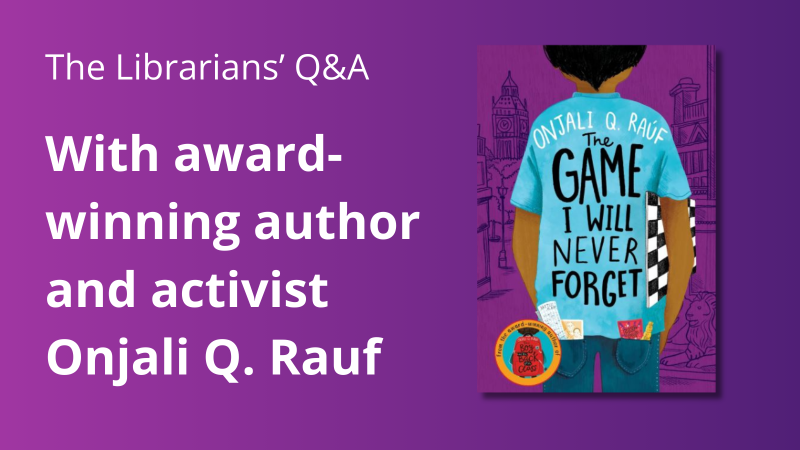
The Librarians' Q&A: with award-winning author and activist Onjali Q. Rauf
August 28th 2025
Award-winning children's author and activist Onjali Q. Rauf talks about about the inspiration for her powerful new book, The Game I Will Never Forget. The book explores some big themes; dementia, bereavement and the loss of a grandparent.
Onjali also talks about child carers, and the importance of building connection and bonds at a time where the world can seem increasingly divisive.
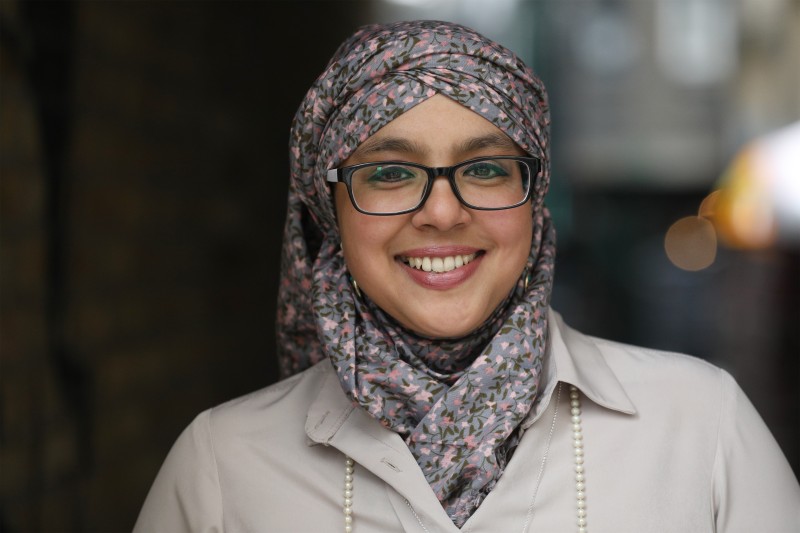 |
Onjali Q. Rauf | Author Onjali Q. Raúf is an award winning and best selling children’s author and activist. Her debut book, The Boy at the Back of the Class, was met with critical acclaim whose awards include the 2019 Blue Peter Book Award and Waterstones Children’s Book Prize. Onjali is the founder of Making Herstory, an organisation that mobilises men, women, and children from all walks of life to pro-actively deal with the abuse and trafficking of women and girls in the UK and beyond. She is also the founder of O’s Refugee Aid Team, an organisation that provides support for refugee families surviving in Calais and Dunkirk. |
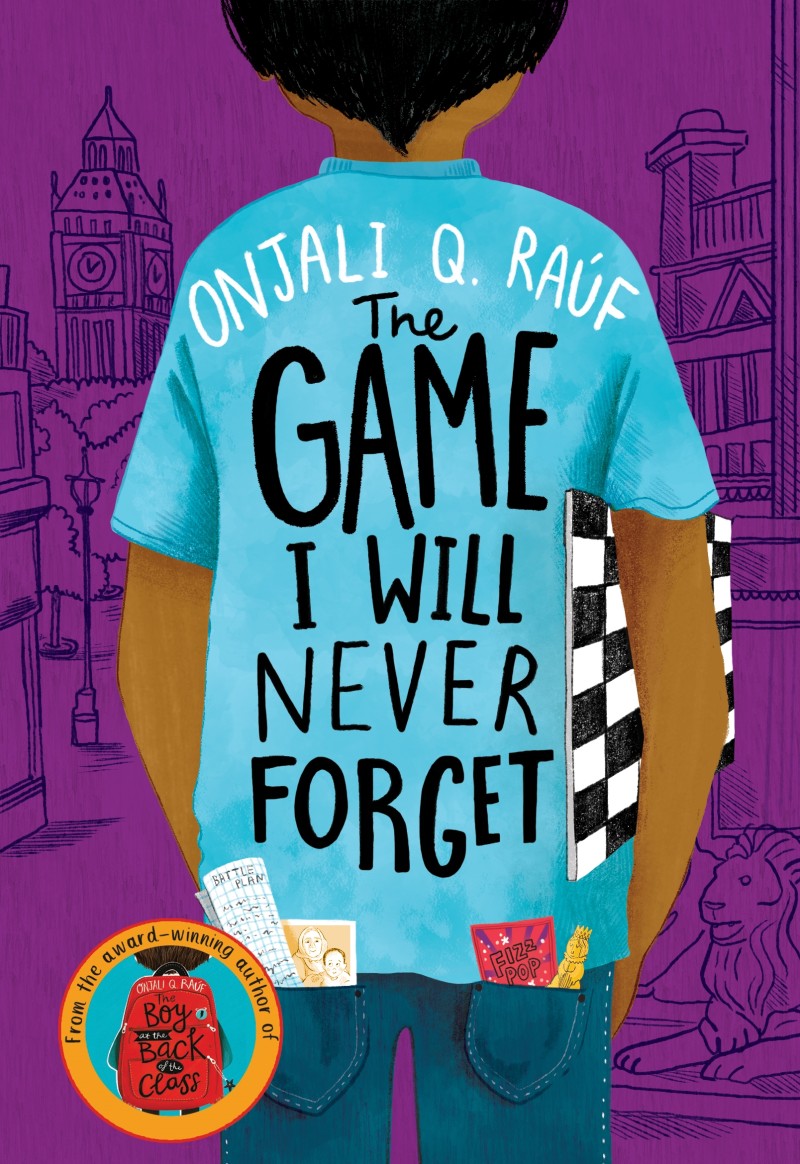
Can you tell us a little bit about The Game I Will Never Forget – what was your inspiration for the book?The inspiration for the book came from three people of my world. My brother (whose name is, yup! Zak!) who was a chess champion at school, my own maternal nani who really did come to live with us for a year when I was around thirteen years old, and my step-in nani Julekha, who looked after my brother and me every summer and after school when we were kids, whilst our real nani lived on the other side of the planet. Each constitute the foundation for the story. Witnessing firsthand over the past two years, memories and an entire, beautiful person in the form of my nani Julekha, begin to fade and disappear and ultimately be taken by dementia, was the propeller of the story. Most of this book was written after late night visits to nani Julekha’s bedside, trying to see if she could remember us – right up until the night she passed away. I know from speaking with so many children, that many are having to witness and grieve the loss of their grandparents too: it’s a reality and a moment that shifts the DNA of our worlds in so many ways. So, the book was written with the impact of such a loss upon as kids, very much in mind. You were a child carer; what would you like to say to those children caring for relatives at the moment?That you are true, stupendous s/heroes: each and every single one of you. That you are NOT alone – you are joined by tens of thousands of Young Carers across the country going through what you are going through too. And that you DESERVE respite, rest, friendship, careers, and a chance to excel in the areas you want to. |
 |
That includes of course, being recognised by the government for what you do each and every day (hence my #EveryYoungCarer campaign with Carers Trust, asking the UK government to legally recognise Young Carers below the age of 16, and get them the help they need). So please, please find and join your local Young Carers groups and go join – there is a world of help waiting, not to mention new friends too. And ask your teachers to set up a Young Carers groups in school too (if you don’t already have one). You’d be surprised at just how many other Young Carers are in your midst.
The world can seem increasingly divisive, and there's evidence people feel more lonely than previous generations. A lot of your work outside writing is about making connections and influencing people. What are your tips on meeting people for the first time and creating a bond?
I would say the key thing is simply listening. I’m an introvert at heart and often have to push myself out of the door, so I find meeting lots of new people in one go overwhelming at times. The only way I can let go of the anxiety is to focus in on the person in front of me, and listen to their story – I want to know as much about them as they’re willing to share. Who they are, where they’ve come from, why are they at this place we happen to be meeting. Asking genuine questions (ie bringing out your inner Tintin) and listening to the stories people are waiting to tell you always helps break the ice.
That listening and those questions however, have to be put forth with a high degree of mutual respect. Respect for boundaries (some people may not want to answer all your questions), respect for who each person is (even if their views might be different to yours) is so crucial – especially when encountering someone you’ve never met before. Respectful listening is where great conversations – and oftentimes friendships too – start. Sadly, that quality seems to be something that is being lost: hence the polarisation and loneliness for too many.
"I would say the key thing is simply listening. Asking genuine questions and listening to the stories people are waiting to tell you always helps break the ice." |
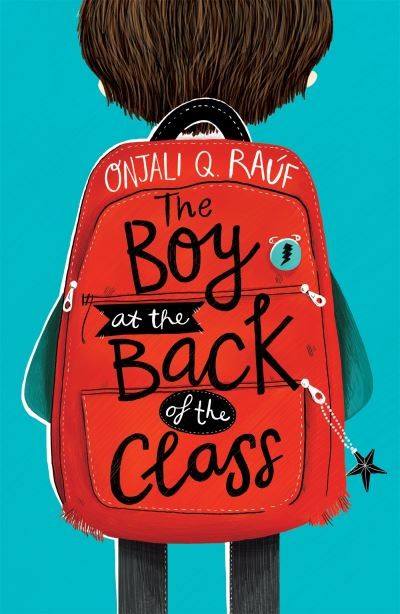
Your first book, The Boy at the Back of the Class, has been hugely popular. What led you to writing it?The child refugees who continue to be facing inhumane conditions across northern France – and in particular, a three-day-old baby named Raehan whom I only got to meet for 20 minutes back in 2016 (before police moved in to destroy the site he was on), were the catalysts for the creation of The Boy. The questions posed by the narrator about the refugee crisis, and the frustrations felt at the utter failure of the grown-up world to stop any wars and help fellow human beings fleeing actual, fatal harm, came almost verbatim through the questions asked of me by nephews, nieces and Godchildren whenever I return back from a convoy. It wasn’t a book I had planned on writing, or ever expected to write, but I am so glad I did. I remain grateful to every parent and teacher using it to help open eyes and hopefully help stop the increasing escalation of deeply racist dehumanisations of refugees in both the realms of politics and media. I hope the story goes on, stripping away the negative language and hate being normalised all around us, to just a story about a little boy who has survived the worst the world can throw at him, and one who is lucky enough to meet four rather spectacular kids. |
 |
Are there any other authors who have particularly inspired you?
Authors both present and past by the bucketloads inspire me, keep me thinking and imagining. When it comes to those that were particularly memorable in my childhood, the TinTin comic books, any Roald Dahl, Oscar Wilde, E. Nesbit, CS Lewis or Frances Hodgson Burnett – and Blyton’s Famous Five book I ever read definitely made up my inner worlds.
My later teen and tween years all revolved around Benjamin Zephaniah (who I got to see perform when I was 17 and who revolutionised my world), discovering the poems of Maya Angelous, Hafez, Rumi and Tagore, going Tolkien and JK Rowling mad, and becoming obsessed with Mary Wollstonecraft, Austen and the Brontes. If we’re talking more recent authors, I deeply enjoy anything by Frank Cottrell-Boyce, Bali Rai, J.T. Williams, Sufiya Ahmed, Nikita Gill, William Dalrymple and Chimamanda Adichie. Whether they’re authors for the adult or children’s realms, novelists, poets or historians, doesn’t matter. They each imprint on me in some way.
What was your relationship with libraries growing up? What is the importance of public libraries?
My libraries – both at school and in town, are the only reasons I’m here. That’s how important they will always remain to me. My mum and dad worked incredibly hard, but books were a luxury – not something we could afford to buy whenever we wanted. Besides which, there was barely any room for the stack of books I wanted as a kid in our council flat. So every Friday, rain or shine, was Library Day in my household: it’s when my mum would pick us up from the childminder’s, and run to the library with us so we could max out our library cards. Access to those shelves, those books, those gateways to adventure, meant everything. Still means everything. Without it, I wouldn’t have met even half the authors and stories I did, which inevitably helped forge my own ideas for stories, be it consciously or unconsciously.
The importance of public libraries – these playgrounds for the mind, these havens for inventive thinking and inspirations, is the TRUE equaliser of societies. Rich or poor, Black or White, young or elderly, matters not. We all deserve access to these spaces – which are often so much than just a place to get books from too. For many within our worlds, they are the frontline to getting help with issues of homelessness and domestic violence, unemployment and loneliness. Getting rid of them as this government and so many councils are doing, is a blinding, binding and decimating of any chances we may have for a more equal, fairer society. And they know it.
|
The Game I Will Never ForgetThe day after his tenth birthday, the last thing Zak expects – or wants – is to have to give up his room for an ageing grandmother. With the help of his friends and a series of tactics inspired by his school's chess club, Zak is convinced it'll be no time before he can reclaim his rightful territory!But Zak soon discovers that his nani is no ordinary old grandma but a former chess prodigy, able to outwit and outdo him - and his friends - at every turn. Just as both players begin to forge a mutual respect and a friendship that might finally overcome all obstacles, Zak begins to notice things. Like how Nani sometimes forgets where she is, or who she is... Or how she keeps asking for people who are no longer by her side... You pay £5.91 RRP £7.99 Save 26% |
|
Peters Teen Fiction Book of the Year, Northern Soul: Q&A with Phil Earle |
 |
- hello@peters.co.uk
- 0121 666 6646
- Send a message
- Meet the team
- Peters Ltd
- 120 Bromsgrove Street
- Birmingham
- B5 6RJ