GO
Sorry, but you already have a basket with that name. Please use something else.
Are you sure you wish to delete this basket?()
This action cannot be undone.
Sorry, something went wrong
Please report the problem here.
The Carnegie and Greenaway winners are...
June 19th 2017
It's the moment we've all been waiting for - the 2017 CILIP Carnegie and Kate Greenaway Award winners have been announced! Read on to find out more about the authors with our Q&As. What's more - take advantage of 40% off the winning titles! For now, here are the Carnegie and Greenaway winners, plus the Amnesty CILIP Honour winners: Carnegie award winner Ruta Sepetys, Salt to the Sea 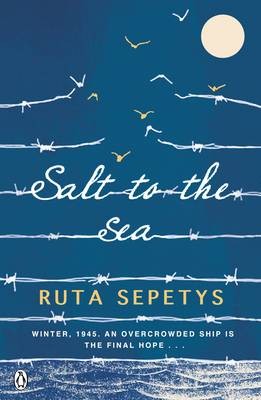 Greenaway award winner Lane Smith, There is a Tribe of Kids
 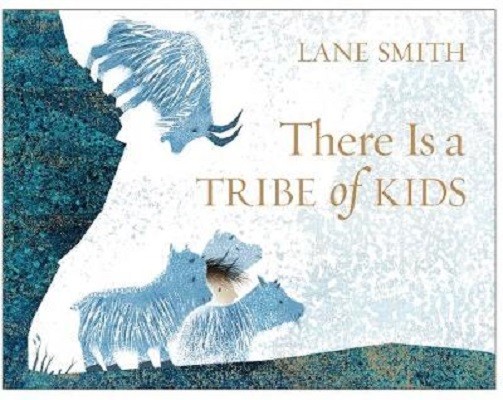 Amnesty CILIP Honour - Carnegie winner Zana Fraillon, The Bone Sparrow
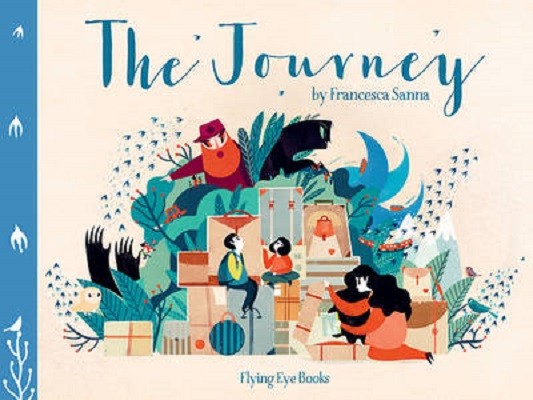
  Amnesty CILIP Honour - Greenaway winner Francesca Sanna, The Journey
  And now on to our insightful interviews with the winners...
Ruta Sepetys, 2017 CILIP Carnegie Medal winner
- Congratulations on your Carnegie Medal for Salt to the Sea! We love this deeply affecting refugee story set in the Second World War. What inspired the story for you?
Thank you! I’m so honoured and grateful that this part of history is being recognised and shared. Millions of people were involved in the evacuations near the end of World War II. I wanted to portray the story of the young people—the innocent souls forced to leave everything they had ever known and loved behind. My father was one of those children. He fled from Lithuania and spent nine years in refugee camps. My father’s cousin was part of the evacuation and she was granted passage on the Wilhelm Gustloff. By a twist of fate, the day of the voyage she did not board the ship. She urged me to write about the sinking.
- You’ve written historical fiction before; what is it that draws you to the past, and setting your stories in a different time?
I am drawn to hidden history and stories of strength through struggle, so I look for topics that contain those elements. Through historical fiction we give voice those who may never have a chance to tell their story. That inspires me!
- The structure of Salt to the Sea is split between several different points of view. What made you decide on this style?
While researching the novel I was reminded that many different regions and countries were involved in the evacuation. When I interviewed people, I realised that human beings can experience the same event but have very different interpretations of it, based on their background or country of origin. So I created four characters to allow readers to look through different cultural lenses.
- Where do you like to do your writing?
Our family has a cabin in rural Tennessee. It’s perched on a ridge with a beautiful view of the lake and it’s my favourite place to write.
- What is your favourite book, and what are you reading at the moment?
I don’t have a single favourite book, but a novel that made an enormous impression on me as a young reader was James and the Giant Peach by Roald Dahl. I still adore that book! Right now I’m reading research material for my next novel which is set during the Franco dictatorship in Spain.
Lane Smith, 2017 CILIP Kate Greenaway Medal winner
- Congratulations on your Kate Greenaway Medal for There Is a Tribe of Kids! We love this adventure through collective nouns as a little boy tries to find his own place in the world. What inspired the story for you?
Thank you! I wanted to do a story about a journey. About a lonely boy wanting to belong to a family. I knew I wanted lots of animals in the story and as I read some of their group names I thought collective nouns could be a fun way to keep the story moving.
- Which is your favourite collective noun from the story, and which did you most enjoy illustrating?
Some of the collective nouns were very odd and funny. I liked a “turn of turtles.” I knew I just had to do an illustration of turtles marching single file then turning off road. Sometimes if I was doing a non-animal group for which there was no collective noun I got to imagine what its collective noun might be. I did this with “formation of rocks.” That is my favourite illustration in the book. I like that the boy so wants to join a group that he is actually imitating rocks!
- What materials did you use to create the distinctive style of the book?
I used many different materials. I drew the boy with coloured pencils and painted the backgrounds with oil paints sprayed with acrylic varnishes for texture. I then used a computer to put them all together. Years ago, I used this same “collage” technique but with scissors and glue to put the pieces all together. Today I use my computer for cut-and- paste… which means I don’t have to wash glue off my hands every ten minutes.
- Where do you like to do your writing and illustrating?
My office is a 100-year-old red brick schoolhouse in the woods of Connecticut, USA. I have decorated it like a school with maps on the walls and globes and chalkboards and an old desk and cursive type that runs all along the edge of the ceiling. It’s like going to school every day (except I never get yelled at by my teachers for doodling when I should be doing my maths).
- What is your favourite book, and what are you reading at the moment?
I have many favourite books: Fishy by Leo Lionni, Circus by Brian Wildsmith, The Snowman by Raymond Briggs, Where the Wild Things Are by Maurice Sendak… and lots more. Lately I have been rereading all the wonderful Ray Bradbury books I read when I was a schoolboy: The Martian Chronicles, Fahrenheit 451, etc… Amnesty CILIP Honour Winners
Francesca Sanna, Amnesty CILIP Honour from the Kate Greenaway Medal shortlist
- Congratulations on your Amnesty CILIP Honour award for The Journey! We love this beautiful refugee story about a mother and her two children and their journey to freedom. What inspired the story for you?
The first element that inspired the research behind The Journey was a sense of frustration from the discussions I’d had over and over with friends, colleagues and acquaintances around the topic of “immigration”. In the last few years, the answer in Europe, and around the world, to this very complex topic hasn't been one of dialogue, in my opinion. I felt a little hopeless about it. So I decided to do the research for my Master in Design about this theme. I ended up hearing some incredible people talking about their powerful stories, and that definitely what inspired this book.
- Your book has opened up discussion for a lot of young people on the topic of home, war, and safety; was this your intention – did you want to create a story with a message?
I am not sure I really want to put a message in the story but, on the other hand, I had a few points and ideas in my mind while I was creating this book. One thing that really made me think is that we have to remind to ourselves that the right of having a safe place to live is a human right and a fundamental one. We probably take it for granted, but this was one of the messages that I wanted to convey with The Journey: it is the right of every person and every child to have a safe place, a “home”.
- How do you create your stories – do the words or illustrations come first? In this case, the illustrations came first, because there were many elements I could not explain with the text. I needed a visual narration first.
- Where do you like to do your writing and illustrating?
I don't have a favourite place. I have a studio where I like to work, but sometimes I also like to bring my laptop to a café in the centre of Zurich (where I live) and write or sketch there. What I really need when I sketch is my headphones, to listen to music or audiobooks.
- What is your favourite book, and what are you reading at the moment?
A very difficult question. A book (or a series of books) that I’ve loved since the first time I read them is the "Our Ancestors" trilogy, by Italo Calvino. I’ve also just finished reading the Beetle Queen by M.G. Leonard.
Zana Fraillon, Amnesty CILIP Honour from the Carnegie Medal shortlist
- Congratulations on your Amnesty CILIP Honour award for The Bone Sparrow! We love this affecting, important story about friendship, refugees and survival. What inspired the story for you?
I knew I wanted to write a story about a child growing up in an immigration detention centre for a long time. It is inconceivable that there are children who have known nothing except the insides of these camps, and I wanted to bring this reality to the rest of us, because it is something most of us rarely consider. I had been hearing statistics and reading about asylum seeker policies in the news, and I realised what was missing was the voices of the actual people behind the numbers. It was far too easy to forget that what these policies were referring to were real people, with voices and stories. I wanted us to remember.
- Your main character, refugee Subhi, proves that children are resilient beyond measure. Were you inspired to bring him to life by any brave children in literature, or by real children you met?
When Subhi's character came to me, he came fully formed and very much his own person. But his resilience was definitely inspired by real kids that I have worked with over the years. These are kids who are living in extreme circumstances, but they don't realise how bad their situation is. For these kids, their situation is just life, so they get on with it. One of the really remarkable things about kids is how full of hope and resilience and strength they are, and I wanted to show this through Subhi.
- It’s important for children to have different ways to explore and understand the refugee crisis; did you set out to write a story with a message?
I didn't set out to write a story with a message - I set out to show what is happening right now in our countries. I wanted readers to be aware of the situation, so they can make their own mind up about the state of things, and decide what to do for themselves. A lot of the people reading The Bone Sparrow are at that wonderful stage in their lives where they are deciding the kind of adults they want to become and the kind of world they want to live in. The more they know about the world as it is right now, the better. But really, I just wanted to write Subhi's story as well as I could, because he had a lot to say.
- Where do you like to do your writing?
I am incredibly lucky that over the last summer my husband (with the help of our three boys) built me a writing studio up the back of our garden. It is the perfect space, and just opening the door fills me with that buzz of ideas. The rest of the world fades away, and it is just me and the story (and the dogs by my feet...).
- What is your favourite book, and what are you reading at the moment?
I have so many favourite books, and my absolute favourite changes with my mood. At the moment, my two favourites (it is cruel to ask for just one...) are A Man Called Ove by Fredrik Backman, and Secret Heart by David Almond. They are two of my all time favourite authors, and their books always call me back to be read again and again. I have just finished reading The Graveyard Book by Neil Gaiman which was so, so wonderful and I can't believe it has taken me until now to discover it, and I am about to start reading The Bunker Diary by Kevin Brooks which came very highly recommended by my son.
- hello@peters.co.uk
- 0121 666 6646
- Send a message
- Meet the team
- Peters Ltd
- 120 Bromsgrove Street
- Birmingham
- B5 6RJ