GO
Sorry, but you already have a basket with that name. Please use something else.
Are you sure you wish to delete this basket?()
This action cannot be undone.
Sorry, something went wrong
Please report the problem here.
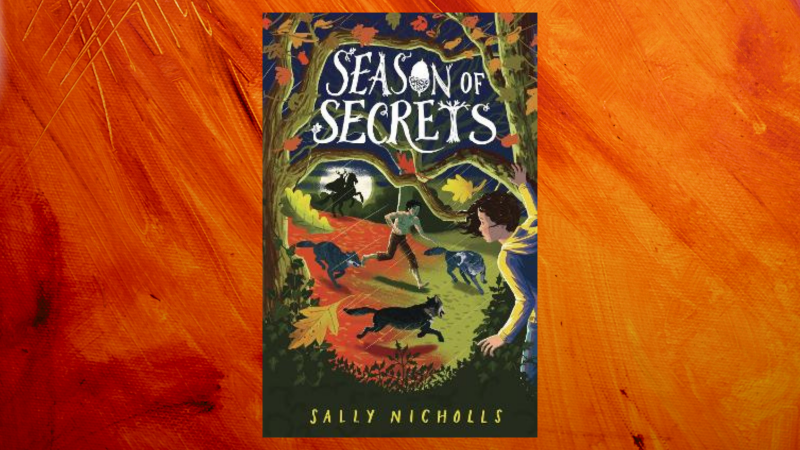
Season of Secrets by Sally Nicholls
January 11th 2022
I was twenty-three years old. I had just finished an MA in Writing for Young People and was back living with my mother, going through the depressing process of applying for a Proper Job for the first time in my life, and failing miserably.
I had come out of my MA with a novel called Ways to Live Forever. Doing my MA was one of the best decisions I’ve ever taken. For the first time in my life, people took my desire to be writer seriously. I had a deadline, and a whole year with nothing to do but write.
Now, sitting on the sofa in my mum’s lounge with my old laptop, I had none of those things. I was floundering.
My big problem, I realise now, was that while I had several ideas for a novel, I didn’t have a plot. A children’s book without a plot is dead in the water, but at twenty-three this basic fact was yet to occur to me. All my big ideas for a second novel floundered after a couple of pages.
I missed my MA. I missed my deadlines. But my course had turned me from someone who wanted to be a writer to someone who was a writer. So I kept at it.
Ideas are funny things. When I talk to young people about writing, I compare them to the feeling you get when you come across a book, or a TV show, or a film which is yours. It might not be the cleverest or most well-written book you’ve read that year. But something about it speaks to you. Maybe it’s the humour. Maybe the sexy lead. Maybe just the vulnerability of that minor character you can’t get out of your head. It doesn’t really matter. That book, or that TV show, belongs to you. It becomes part of your identity; you buy the t shirt, go to the conventions, make up stories about the sexy lead while you’re on the bus. It’s yours.
Ideas are the same for me. Sometimes I’ll read a story, or a news article and I’ll think: that’s mine. “
“That’s a nice idea. I’ll ‘ave that.”
The story of the Oak King and the Holly King, which forms the basis for Season of Secrets, was one such idea. I was only a year out of my Philosophy and Literature degree, and the idea of using stories to convey emotional and philosophical ideas – about the seasons, about death and renewal, about hope – was exciting. (Though as a seasoned novelist, I now know this is the bread-and-butter of a writer’s craft.) I’d studied the Fisher King at university, and something about the wounded man who sickens the world around him was very compelling to me. I’ve always had a bit of a thing for wounded heroes.
And basing my novel around a story gave me the structure I needed. I knew for a KS2 fiction books I would need a child character whose story would reflect the Oak King’s, and grief seemed an obvious emotional journey to pick. The Oak King’s story has a lot in common with the story of Persephone, another seasonal myth. Except that what most people forget about Persephone is that it’s not the young girl who brings the autumn and winter. It’s her mother. The Persephone myth is actually a story about Circe, her grief, her joy when her daughter is returned to her.
There are a lot of children’s books and books for teenagers about grief, and they mostly end with the child being mostly okay at the end of it. So does this one. But I liked that the winter is still there in my story. Grief is cyclical. It doesn’t go away. Molly’s grief is not healed by the coming of the spring. She is just able to conceive of a world that has life and joy in it as well as sadness.
The moment I started writing, I knew I had my second novel. Soon I had an agent as well, who told me she’d like to wait until the new year before submitting my young adult fiction book. So I carried on living at home, writing job applications and typing away at the book that would become Season of Secrets.
And then, one day in January, I got a phone call from my agent. A publisher had made an offer for my first book. I was going to be an author.
That was nearly fifteen years ago, and it’s still up there as the best moment in my whole publishing career. It beat going onto the set of a film made out of my book. It beat being shortlisted for a Carnegie. I was going to be published. I was going to be an author.
As winter turned into spring, I began to find my feet in this new adult world. I moved to London and got a part-time job working for a small charity. I joined an online writers’ community and made friends who are still part of my writing life today. Ways to Live Forever was published, and did much better than I’d ever expected it would. And I wrote my second book.
I still meet people today who tell me how much they loved Season of Secrets, how much their children loved it. I’m delighted that Andersen are reprinting it for a new audience to encourage reading for pleasure. It holds a very special place in my heart.
Seasons of Secrets by Sally Nicholls is available now.
- hello@peters.co.uk
- 0121 666 6646
- Send a message
- Meet the team
- Peters Ltd
- 120 Bromsgrove Street
- Birmingham
- B5 6RJ