GO
Sorry, but you already have a basket with that name. Please use something else.
Are you sure you wish to delete this basket?()
This action cannot be undone.
Sorry, something went wrong
Please report the problem here.
Reflections on The State of the Nation's Adult Reading 2025
October 22nd 2025
The results are in! In their latest survey, The State of the Nation's Adult Reading, The Reading Agency surveyed a representative sample of 4000 adults about their reading habits outside of work or study, links to wellbeing, and the barriers to reading they encountered. The findings of the report, published earlier this month, will come as no surprise to librarians and booksellers. Peters' Adult Librarian Sarah shares her take on the results.
|
|
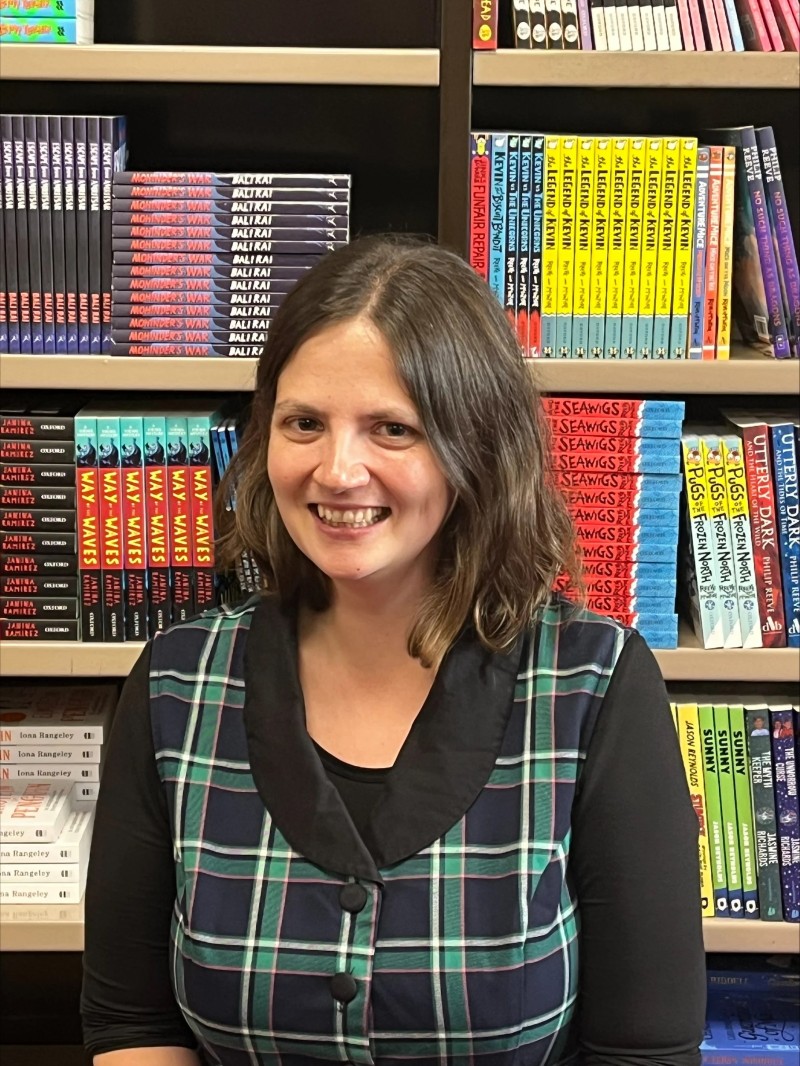
Sarah Lawrence, Librarian (Adult) Sarah has visited libraries ever since she was a child completing the Summer Reading Challenge. She has worked with adult books in a specialist library, a secondary school library, and a university library. Owner of more books than bookshelves, Sarah enjoys reading and exploring new worlds from the comfort of her favourite chair – and the bus, a garden bench, or pretty much anywhere. She especially loves mystery, poetry and nature writing. |
Reader identity and habits
|
53% of participants self-identified as a regular reader – someone who reads more than once a week – an increase of 3% on last year’s results, which works out at roughly 120 people. However, 82% reported reading something each week, vastly different to the ‘regular reader’ number, so what makes this 29% think they are not a regular reader? Perhaps it is the format in which they read. Of the 11 narrative forms that participants were questioned about, social media consistently came out on top across all age demographics, with digital articles being the preference for news engagement for everyone except 64+ who preferred print. For 16-24- and 25–34-year-olds, subtitles were their second media of choice reflecting the rise of streamers and the consumption of online video content amongst these demographics. Print books only appear in the top three for those aged 35 and above and never rises above 3rd position. Regular readers were found to have the highest levels of weekly engagement with all formats, though on average they also spent the least amount of time in one session with them. The greatest disparity between the reader identities related to print books as 79% of regular readers engaged weekly with a text compared to 33% of lapsed readers and 11% of non-readers. The nearest parity in engagement was for social media posts where 77% of regular readers, 75% of lapsed readers and 56% of non-readers all engaged weekly with the format. If then perceiving oneself as a reader is linked to how many books you consume, it is unsurprising that there is a disparity between the numbers who read regularly and self-identify as a regular reader. How can we change this perception and rebrand the term ‘reader’? |
 |
Librarians will also be interested to know that 1 in 5 adults now turn to AI to curate their reading recommendations, with 39% using online resources such as Goodreads and TikTok. How can we engage with this? What impact will it have on our book selection?
Wellbeing
Sleep, happiness, and sense of belonging – three measures of wellbeing explored in this survey. In all three, a higher percentage of regular readers agreed with wellbeing statements then lapsed readers and non-readers, and a higher percentage of lapsed readers agreed than non-readers.
55% of regular readers sleep well compared to 44% of lapsed readers and 38% of non-readers. (Spare a thought for those regular readers who experience poor sleep because what they are reading is so compelling that they can’t put it down!)
68% of regular readers reported generally feeling happy, compared to 55% of lapsed readers and 43% of non-readers.
Meanwhile, 52% of regular readers had a sense of belonging to a community, compared to 38% of lapsed readers and 28% of non-readers. The report posits that this may be because reading of long form fiction – which regular readers are more likely to engage with – develops empathy and increases understanding for other’s experiences. (It also creates fandoms.)
Reading enjoyment, which was given its own section of the report, was found to increase as the participants’ ages increased and to be 11% higher among women. 75% of those asked said they enjoyed reading and 65% agreed that it is important to their lives. It was also noted that formats with long-form content, though engaged with less frequently, were reported as more enjoyable overall. 75% highly enjoyed print books, 62% ebooks and 58% audiobooks, compared to 57% for social media posts.
It begs the question, what links might there be between formats and the three other areas of wellbeing documented?
The barriers to reading and how we can overcome them
 |
In at number one – it’s lack of free time. 24% of participants reported lack of time as the predominate reason they were reading less. Other barriers include: inability to focus because of distractions, cost-of-living, reading confidence, learning differences, and material not being available in a preferred language. Those adults impacted most severely by the cost-of-living crisis are 9% less likely to identify as regular readers and find it harder to source and purchase reading materials. The Reading Agency pairs these stats with the DCMS research into library engagement, highlighting their recommendations for libraries to better promote their services, especially digital reading materials, to those communities that are feeling the cost-of-living crisis most to increase engagement. But is it purely an unawareness of digital services or is there a cost barrier in accessing these too? How might reduced opening hours and locations be a factor that contributes to these statistics? |
Lapsed and non-readers, unsurprisingly, reported to be less confident and comfortable with reading than those who identified as regular readers and often felt overwhelmed or bored, if anything. This was more pronounced for those who had a learning difference such as dyslexia. As librarians, how do we make people still feel welcome and comfortable in the library space when the act of reading does not? Are there other ways we might engage these individuals in storytelling beyond the written word which would bring comfort and joy? (Because some people just don’t enjoy reading, and that’s ok too).
Finally, over 1 in 5 participants reported that they did not have access to books in their preferred language – in particular younger participants. Nelson Mandela once said “If you talk to a man in a language he understands, that goes to his head. If you talk to him in his language, that goes to his heart”. As library collections seek to cater to the needs of their communities, many carry books in the languages of their residents that will speak to their hearts, but do we need to find new ways of making our younger neighbours aware of this?
Concluding thoughts
While there may not be any groundbreaking revelations in this report about reading habits, barriers to reading, and connections between reading and wellbeing, it is always useful to have more data to validate our own conversations and observations.
|
Behind the scenes with Alison Tarrant, Head of Library Services |
|
Back to news and blog...
- hello@peters.co.uk
- 0121 666 6646
- Send a message
- Meet the team
- Peters Ltd
- 120 Bromsgrove Street
- Birmingham
- B5 6RJ