BACK TO NEWS
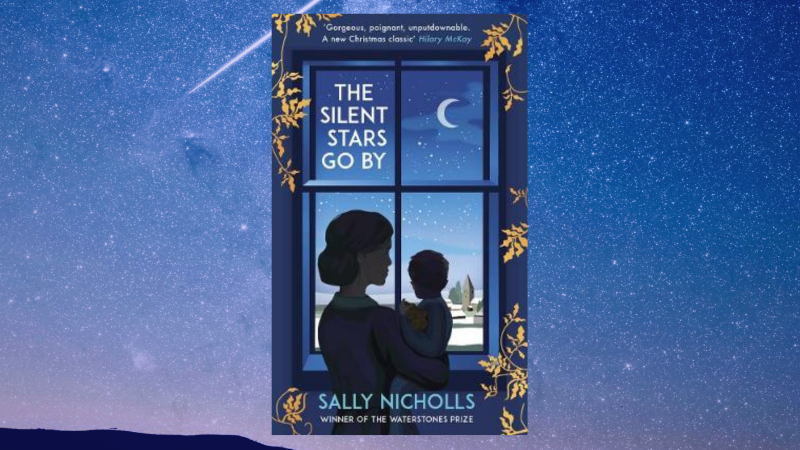
The Silent Stars Go By, Q&A with Sally Nicholls
November 5th 2021
The Silent Stars Go By is about a young woman in the 1910s whose baby, born out of wedlock, has been raised by her parents as her brother, to avoid a scandal. Where did the initial idea for this story come from?
Actually this was another suggestion from my editor, Charlie. We talked about different books I might write next, and she said she’d always been fascinated by the dynamic of families where children were being raised as siblings. It’s not something that has been covered much in fiction, certainly not in young adult, but it’s one of those fascinating dynamics where there aren’t social rules for how one is expected to behave, and where there isn’t a ‘right’ way to act. Margot feels like whatever she does she is letting someone down, which is a great premise for a book.
The novel is set after the First World War, and all of the characters have in some way been affected by it. What fascinates you about this period?
It’s a period of great social change, like the one we’re all living through right now. Like our current strange times, it’s a change which was forced on people very much against their will, and with devastating consequences for many – just under 2% of the population was killed. But it also created many opportunities for people, particularly those people who had been traditionally undervalued, such as women and the working classes. Societies in flux are always interesting to write about.
Women’s place in society is an important theme in your work – particularly in your last YA novel, Things a Bright Girl Can Do, which looked at the campaign for women’s votes. What aspects of women’s lives and freedoms does this new novel look at?
Well, the big one is sexual freedom of course – women have always been socially punished for sexual transgressions, to a much greater extent than men, and this novel shows the cost of that. Margot cannot raise a child as a sixteen-year-old mother without her parents’ support, and that’s a huge loss for her and her son. That’s the big one, but the novel also explores how hard life was even for ordinary housewives after the war. A big source for that was Elizabeth Cambridge’s fabulous novel Hostages to Fortune which I’d recommend to anyone interested in women’s history of the period.
What research did you have to undertake in order to write this novel?
Not as much as for Things a Bright Girl Can Do, as I already had a good sense of how these people spoke and thought and what their bathrooms and underwear looked like and all that sort of thing. The book is set two years after the end of Things a Bright Girl Can Do. But of course those are two very momentous years. As ever, novels and memoirs written at the time were the most useful – I list the best of those in the acknowledgements.
The Silent Stars Go By is set a century ago, so a young woman in Margot’s position now would have a different set of choices. How much do you think has changed for pregnant teenagers? Do you think there may be different pressures now?
The situation is completely different now, and it’s definitely better. In 1919, we didn’t have a foster care system – many orphanages wouldn’t take the children of unmarried mothers so as not to ‘encourage immorality’. There was no safe, legal access to abortion. The levels of infanticide and abandonment and of babies who died in workhouses and orphanages were huge.
Of course, there are different pressures on teenagers nowadays – sexual freedom and the necessity to prepare for the world of work come with pressures and responsibilities and decisions. But those are still good things to have. I would rather our exam system was less pressured (most countries which require you to stay in education until eighteen don’t also make you take exams at sixteen, for example). But I’d much rather live in a world where girls are allowed to study at university, enter professions, and support themselves.
The relationship between Margot and her parents is quite formal and distant. How did you go about developing it on the page?
Margot is quite a private person, and what happened to her is hugely isolating. I read a study of women who had chosen to give up babies for adoption, and one thing which came up over and over again was how damaging the secrecy was. Women felt entirely separate from their friends and communities. I think this secrecy makes it hard for Margot to have a relationship with anyone – it’s noticeable that, Harry aside, the only people she has any sort of connection to in the novel are people who know about her son.
Margot’s parents expect her to behave and react in a particular way, and that has damaged their relationship as well. She is also expected to feel grateful to them – and she is, profoundly – while also resenting them, being angry towards them, and being jealous of them.
It’s a hugely complicated relationship, which makes it fascinating to write. But it doesn’t exactly promote intimacy!
The Silent Stars Go By has an unusual romance at its centre, as the lovers are reuniting for the first time for over two years, and there is a big secret lying between them. What do you hope readers will draw from Margot and Harry’s rekindled relationship?
Oh, the romance was great fun to write. All the best romances have lots of unresolved sexual tension and some big reason why the lovers can’t be together – whether that’s warring families, social status or some huge misunderstanding. I love Harry, and I hope my readers love him too.
Which other historical or romance writers for young adults do you admire? Who do you turn to for your own inspiration?
Ooh, good question. Elizabeth Wein (particularly Code Name Verity), Rainbow Rowell, Berlie Doherty (particularly Dear Nobody), Hilary McKay (particularly The Skylarks’ War). I’m reading a rather old-fashioned historical YA at the moment – Jill Paton Walsh’s Fireweed, about two teenagers falling in love during the London Blitz. It’s short, beautifully written, full of brilliant details and set against the backdrop of a world completely upturned – perfect pandemic fiction.
The Silent Stars Go By is available now.