GO
Sorry, but you already have a basket with that name. Please use something else.
Are you sure you wish to delete this basket?()
This action cannot be undone.
Sorry, something went wrong
Please report the problem here.
Q&A with Dean Atta
May 24th 2021
Q: Your verse novel The Black Flamingo was shortlisted for last year’s Carnegie Medal, and went on to win the Shadowers’ Choice Award voted for by students. What did it mean to you to be shortlisted and for the book to be so popular with readers?
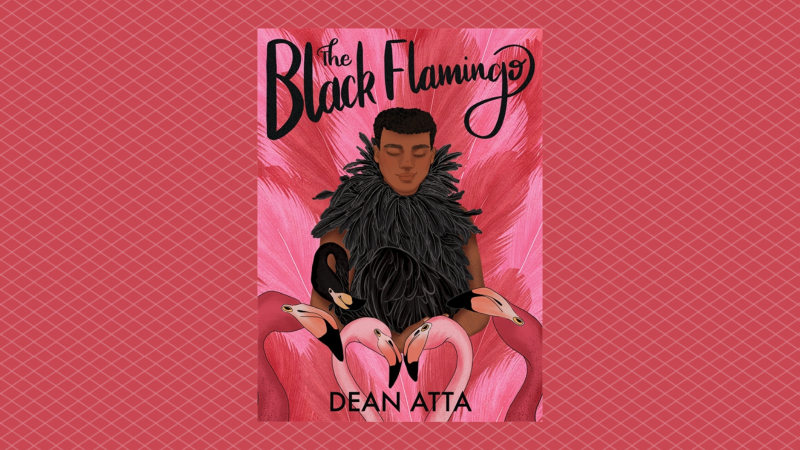
A: I didn’t know much about the Carnegie Medal because this is my first YA book. The medal only came to my attention when Elizabeth Acevedo won in 2019 with The Poet X, a verse novel that influenced me when I was writing The Black Flamingo. When I discovered The Black Flamingo was nominated and later shortlisted, I was very pleased but I also felt some pressure. Acevedo being the first writer of colour to win the medal in its 83 year history was what made the headlines, in a similar way to Bernardine Evaristo being the first black woman to win the Booker Prize the same year. As a black writer, when you are nominated for a prestigious award there is a lot of emphasis placed on your blackness. With The Black Flamingo having the word “black” in the title and a picture of a black boy on the cover, I felt like there was an added pressure for the book to do well from a representation point of view. Winning the Shadowers’ Choice Award was fantastic because it confirmed what I was hearing at school visits, at festivals and online. Namely that The Black Flamingo connects with a wide range of readers. It’s enjoyable and educational for all but black and LGBTQ+ young people have felt especially represented by the book.
Q: The Black Flamingo is a novel written in verse – what made you decide to write it in this way, and how do the writing style and the themes explored in the novel interrelate?
A: I had written, performed and published poetry for over a decade before writing this book. I would call myself a poet first and foremost. A verse novel was the obvious bridge for me to take into writing fiction. Novels written by Elizabeth Acevedo, Sarah Crossan and Jason Reynolds paved the way for me. This writing style worked for The Black Flamingo because the protagonist Michael writes and performs poetry as part of the story, which makes his narration in verse seem natural. There are some standalone poems which are presented as being from Michael’s notebook and sit beside the story without needing to be narrative. Between the narrative voice and the notebook poems, I believe The Black Flamingo is both a page-turner but also has some moments where the reader may stop and reflect for a while.
Q: What are the key messages that you hope readers of The Black Flamingo will take away from the book?
A: The ultimate message is about self acceptance and love. Another key message is that your family can include chosen family. In Michael’s case that’s his drag family, as well as his best friend Daisy who is welcomed into Michael’s family. Forgiveness is also a key message in the book but I can’t say too much about that without giving too much away.
Q: Stats show that still only a small percentage of children’s and YA books published in the UK have protagonists or characters from an ethnic minority, and similar is true of LGBTQ+ representation. There have been some moves in the publishing industry to begin addressing this, but there is still a long way to go. Do you feel that representation and diversity in children’s books is improving?
A: As a reader, I’m particularly interested in stories that feature black and LGBTQ+ characters. And when I’m buying picture books for my two nieces I look for books that feature black girls as the main characters. I am glad for bookshops like Round Table Books in London because they stock so many diverse books and when I walk in there I don’t feel like a minority. I hope for a day when little black girls like my nieces or little black boys like I was will see themselves on bookshop and library shelves whatever part of the UK they happen to live in.
Q: Which other poets or novelists’ work do you admire, and who inspired you when you were starting to write?
When I started writing I was inspired by poets John Agard, Maya Angelou, Gil Scott-Heron, Michael Rosen, Ursula Rucker, Benjamin Zephaniah, as well as musicians Bob Marley, Kurt Cobain and Tupac Shakur. I was more influenced by song lyrics when I first started to write poetry. I had quite a fondness for musical theatre, as well as Hip Hop, pop, reggae and UK garage.
Q: What’s next – what are you working on at the moment?
Following from my previous answer, music is a big theme in my next YA verse novel Only on the Weekends. The reader gets to know a lot about the characters through their taste in music. The protagonist Mack tries to keep a connection to his mother by listening to the record collection she left behind. I’m excited to be writing another black queer character and I hope readers are excited to meet Mack.
The Black Flamingo is published by Hachette Children's Group and is available now. See the full Carnegie shortlist here.
- hello@peters.co.uk
- 0121 666 6646
- Send a message
- Meet the team
- Peters Ltd
- 120 Bromsgrove Street
- Birmingham
- B5 6RJ