GO
Sorry, but you already have a basket with that name. Please use something else.
Are you sure you wish to delete this basket?()
This action cannot be undone.
Sorry, something went wrong
Please report the problem here.
Polly Pecorino Q&A with Emma Chichester Clark
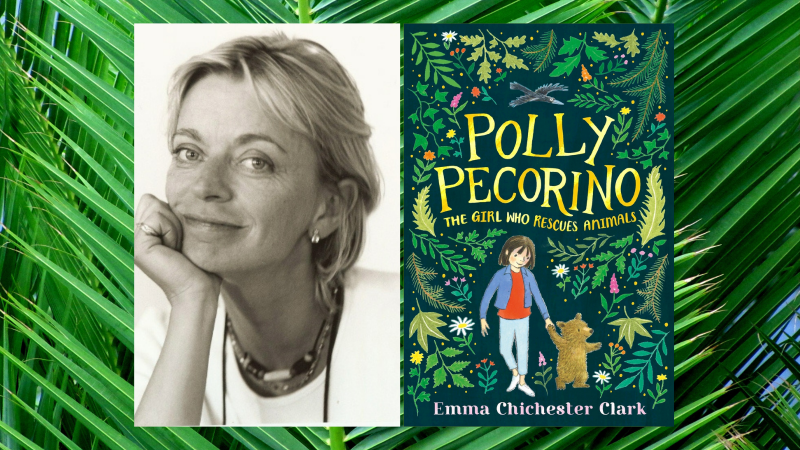
September 2nd 2021
Polly Pecorino rescues animals, and she can talk to them too. She spends all of her time caring for those at Happy Days Zoo, where the devious owners, Mr and Mrs Snell, will do anything to make money. One day they steal a bear cub, certain that he will do wonders for ticket sales, but the ferocious bears living in Wild Bear Woods want their cub back. Will Polly be brave enough to stand up to the Snells and take Booboo, the bear cub, back where he belongs?
Polly Pecorino is the debut middle grade novel from bestselling picture book author Emma Chichester Clark.
What inspired you to write Polly Pecorino?
This is always such a difficult question ... I think the idea of Polly came from my own childhood. I grew up in the countryside in Ireland. We had dogs and bantams and fantail pigeons, and a succession of smaller creatures, such as rabbits and mice, and the place was surrounded by wildlife of every kind. I used to find creatures in distress – usually they were too far gone for me to be able to help them – a rabbit with myxomatosis, a cat that had eaten rat poison, a crow that had been hit by a car – but I always longed to make them better and save a life. Occasionally I managed it, and still, to this day, I can’t help rescuing a drowning insect in a swimming pool.
What motivated you to begin a career in writing and illustrating?
I began to make books when I was about 7 years old. I used to fold pieces of paper and sew up the spines with a needle and cotton, and then write little stories with pictures – usually about Bad Foxes. Much later, a teacher at school asked us to choose a poem and illustrate it – that was the first time I realized that illustrating text could actually be a job, and I knew immediately that I wanted to do it. I was very determined to become self-sufficient and earn my own living this way, so I endlessly set myself projects, illustrating other people’s words – fairy tales, nursery rhymes and so on, and then writing my own stories. Convincing someone to publish them took a long, long time!
What are the major influences in your work and how do you decide on your subjects?
Some of the books I had as a child were huge influences – Madeline, by Ludwig Bemelmans, in particular; Babar, by Jean de Brunhoff; books by Edward Ardizzone; and Tenniel’s illustrations for Alice’s Adventures in Wonderland. My parents had a book called Homebodies, by Charles Addams, that I pored over. The jokes were dark, and I didn’t really understand them, but the drawings were exquisite – economical and unsentimental, with wonderful contrasting light and shadow.
Later, I found books by William Steig and Quentin Blake and loved them for their honesty and humour and immediacy.
When I’m trying to come up with an idea, it usually begins with inventing a character and then working out what is wrong with them. Why are they upset? Or why are they frightened? Or why are they so incredibly happy? What has happened, or is about to happen? The subjects I write about are very often to do with emotions and regularly spring from some remembered injustice from my childhood!
I love inventing a setting for the book to take place in – for example, the Three Little Monkeys, written by Quentin Blake, is set in Paris. It doesn’t say anything about where they live in the text but choosing Paris gave me another dimension to play with. The woods in Polly Pecorino are a mixture of the woods of my childhood home and the woods we go to in the north of Scotland, and also, I tried to give them a flavour of somewhere vast and wild, like Canada.
Which books had a lasting impact on you as a child and why?
All the books I’ve mentioned – Bemelmans especially, and Charles Addams – have had a lasting visual impact. Then there were the Little Grey Rabbit books by Alison Uttley, illustrated by Margaret Tempest – a whole world of small creatures living orderly domestic lives in the hedgerows. I loved anything about animals in the wild – even if they were anthropomorphized, I still believed in them. I loved The Borrowers by Mary Norton – another kind of tiny world, perfectly illustrated by Diana Stanley. I found those books believable whereas I never wanted to read about magic or witches or wizards, which seemed a step too far. Maybe that’s why I really loved The Family from One End Street, written and illustrated by Eve Garnett. It was followed by Further Adventures of the Family from One End Street and Holiday at Dew Drop Inn. These books were completely realistic. They were stories about a large working-class family living in a small town in South East England, their everyday life of ups and downs and little dramas that I’ve never forgotten – like the time when one of the children tries to help her mother, who takes in ironing. The child – the oldest daughter – is ironing a green nylon petticoat and it suddenly shrivels to the size of a pocket handkerchief under the hot iron and is ruined. I think of it every time I do the ironing, even now.
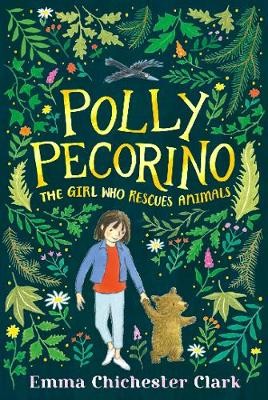
Polly Pecorino: The Girl Who Rescues Animals by Emma Chichester Clark is out now.
- hello@peters.co.uk
- 0121 666 6646
- Send a message
- Meet the team
- Peters Ltd
- 120 Bromsgrove Street
- Birmingham
- B5 6RJ