GO
Sorry, but you already have a basket with that name. Please use something else.
Are you sure you wish to delete this basket?()
This action cannot be undone.
Sorry, something went wrong
Please report the problem here.
Why we need non-fiction
November 11th 2019
Non-fiction November celebrates non-fiction in all its forms, and highlights the importance of reading non-fiction alongside fiction for children and young people.
Here are just a few reasons why we love non-fiction, and why your pupils will too!
Engages reluctant readers
Non-fiction is often easier to dip in and out of, so if you have reluctant readers in your class, it can help build their confidence if they’re feeling a bit daunted. For pupils who just aren’t keen on stories, recommend a non-fiction book instead. They’re bound to find something that fascinates them!
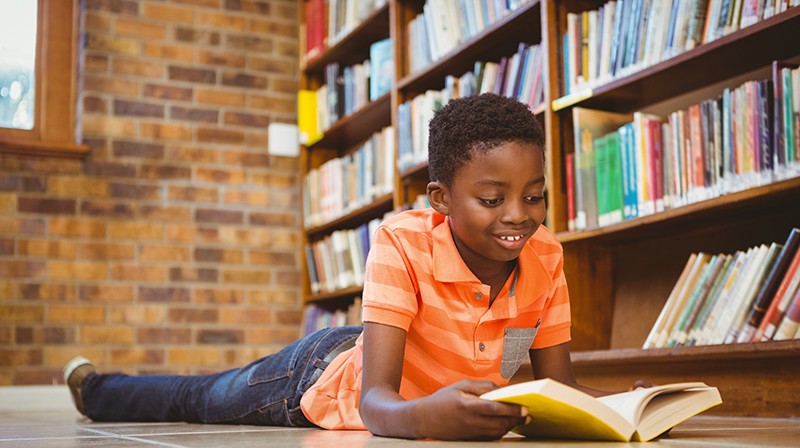
Gets boys reading
Recent studies have shown that nearly twice as many boys as girls will say they don’t enjoy reading. However, studies also show that they’re often more likely to enjoy humour, or books containing facts and figures, so non-fiction can be ideal.
It’s important to find books they can relate to, or on a topic that interests them – whatever that topic may be. Boys are also less likely to talk about what they’re reading, so engage them in conversation about a newspaper article, magazine or book.
Excites pupils with different text types
A non-fiction book with a range of text formats provides something to engage and grab the attention of different types of readers. Illustrations and diagrams, tables, maps and lists can all help to make the information more bite-sized and manageable.
Real-world reading
Non-fiction texts make up 84% of adult, real-world reading. Enjoying non-fiction at a young age prepares children for adult life, encourages questioning and critical thinking, and builds a functional, adult vocabulary.
It’s not just books
Find factual subjects children might be interested in, such as sport, travel, computers or science, then try magazines or pull outs from the broadsheet newspapers.
Helps pupils understand and identify ‘fake news’
Fake news is on the rise: the phrase is now so embedded in our culture that the term was recently added to the Oxford English Dictionary. And for today’s children and young people, access to online and digital media is non-stop – so it’s more important than ever. Non-fiction helps children develop the critical skills they need to understand complex texts, and improves their ability to detect where something might be ‘fake’ news.
Need non-fiction ideas for your students?
Here are a few suggestions from our librarians and curriculum specialists:
For primary schools: 100 Things to Know About Science, Children’s Encyclopedia of Technology, The Slime Book, Explorers: Amazing Tales of the World's Greatest Adventurers, Total Tractor!, Amazing True Stories about Animals Behaving Badly, Humanimal: incredible ways animals are just like us!, My Encyclopedia of Very Important Dinosaurs
For secondary schools: WWE Smackdown: 20 years and counting, Ice: Chilling Stories from a Disappearing World, Fast Cars, Fast Drivers, Star Wars Made Easy, Guinness World Records 2020, Mind Your Head, Heads Up Money, Feminism Is…, The Astronomy Book, The Feminism Book, What is Fake News?
And it’s not just books – how about First News or The Week Junior?
- hello@peters.co.uk
- 0121 666 6646
- Send a message
- Meet the team
- Peters Ltd
- 120 Bromsgrove Street
- Birmingham
- B5 6RJ