GO
Sorry, but you already have a basket with that name. Please use something else.
Are you sure you wish to delete this basket?()
This action cannot be undone.
Sorry, something went wrong
Please report the problem here.
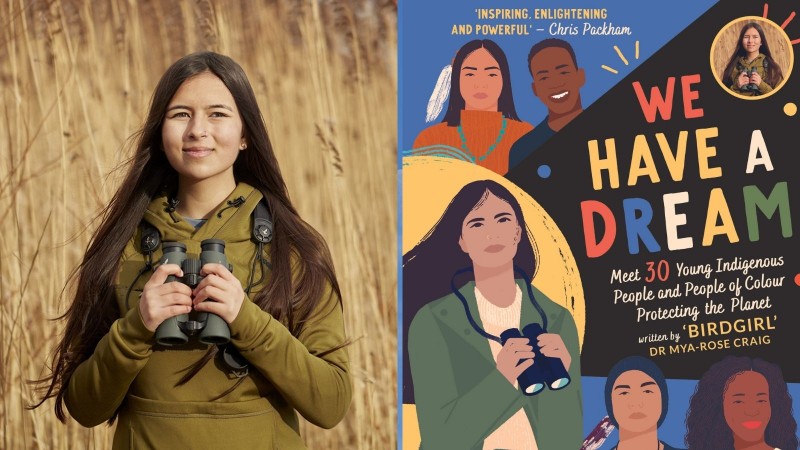
Mya-Rose Craig discusses climate change and her new novel We Have a Dream
October 29th 2021
Mya-Rose Craig:
We are facing a climate emergency – but one which must be framed as a social issue rather than a purely environmental one. For over 350 million Indigenous Peoples around the world, climate change impacts are earlier and more severe due to their location in high-risk environments. They are disproportionately affected by the climate catastrophe, and yet they are under-represented within the global environmental movement. So far, the mainstream environmental movement has failed to understand or address this injustice.
I believe that to protect the environment is to leverage the input and contribution of as many people as possible. But it is not for me to speak for others. The time has come for people to speak for themselves. The covid-19 pandemic has proved that governments are willing to act in extraordinary ways to protect the well-being of their citizens. The impending environmental crisis demands no less action. During lockdown, I spoke to thirty young campaigners from indigenous communities and communities of colour experiencing the stark reality of our changing planet. Our conversations made clear a united dream.
I wanted the book to contain interviews with people that weren’t getting that platform from the mainstream media. The book – called We Have a Dream – is a call to arms, featuring interviews with young People of Colour and Indigenous Peoples from around the world, and charts their dreams for the future of the planet. Almost all the interviewees in We Have a Dream are affected by climate change in their day-to-day life. They have to fight for clean drinking water. They have to stand up to oil companies trying to put pipelines across their land. They have to plant trees to protect their country’s forests. They have been aware of these issues and have been fighting since they were young children, and yet their voices still aren’t being heard.
Those featured in the book all inspired me in different ways, but Archana Soreng was particularly inspiring. She is an environmental activist belonging to the indigenous Kharia Tribe from Bihabandh Village of Rajgangpur in Sundergarh, Odisha, India. She has dedicated her work to documenting the practices of her community and other tribes in her region and believes that Indigenous, traditional and local communities must be at the centre of nature-based solutions and climate policies.
COP26, the UN climate change conference, is taking place in Glasgow in early November. What needs to come from this is tangible action in terms of climate change. I think for a lot of young people climate change is so frustrating because nothing is happening and so much could be done. I also think they need to prioritise global justice within the COP conversations as this is going to be incredibly important moving forward. Through speaking to diverse groups, we will be able to solve the crisis together. As my book shows, we can authentically amplify their voices in our own conversation. Indigenous Peoples’ knowledge and personal experience with climate change is invaluable to the worldwide efforts to truly ensure climate justice. If you want to hear more you could also look to follow Survival International, Greenpeace International and Global Citizen. Engage, listen, share with your communities, and inspire others to do the same.
We have a dream is available now, published by Magic Cat publishing.
- hello@peters.co.uk
- 0121 666 6646
- Send a message
- Meet the team
- Peters Ltd
- 120 Bromsgrove Street
- Birmingham
- B5 6RJ