GO
Sorry, but you already have a basket with that name. Please use something else.
Are you sure you wish to delete this basket?()
This action cannot be undone.
Sorry, something went wrong
Please report the problem here.
How to engage reluctant readers – Top 5 Tips from Pooja Puri

June 17th 2021
Engaging reluctant readers can be tricky. Although I don’t think there is a ‘one-size-fits-all’ technique to encourage children to read a book, here are my top 5 tips on writing a story which might just grab their attention....
- Make sure there is plenty of action
Packing your book with lots of description is great for world-building but it can divert the reader’s attention very quickly. Whilst writing A Dinosaur Ate My Sister, I realised that it was all too easy to throw lots of information and descriptive language at the reader without anything actually happening. Although description is important for building the landscape and world of your story, it can be helpful to condense it, or break it up with action to help sustain momentum.
- Keep it short
Keeping chapters short and snappy is a great way to build pace into your story and keep the reader turning the pages.
- Don’t underestimate the importance of illustrations
When I first began writing A Dinosaur Ate My Sister, I always knew that I wanted it to have pictures. Unfortunately, I’m hopeless at drawing; instead, I wrote a detailed artwork brief for my first draft, in the hope that it would be illustrated when it was taken up by a publisher! I was keen for the pictures to interact with the words, particularly where there was a lot of reading, so that readers would not be overwhelmed by the concepts in the story.
- Less is more
When engaging reluctant readers, I think it is useful to simplify the concepts of your story. This can prove tricky, especially when you are writing fantasy/science-fiction which often relies on complex world-building. When writing A Dinosaur Ate My Sister, I found it helpful to step away from the story and have a careful think about what was really important to the plot. Trust me – you probably have at least ten conceptual strands that you can remove without ruining the story (I know I did!). Choose one or two of the most important concepts and use these as a framework to guide your plot. If readers are struggling to understand the particular workings of your world, it is less likely they’ll be willing to carry on reading your story.
- Make it exciting
Reading should be fun! When writing A Dinosaur Ate My Sister, I was keen to make it as exciting as possible for readers. Have a read of your story and see if there are any places where you can build the tension or suspense. Grab their attention with those opening chapters! Remember, you want to hook the reader into the story. Throw them into the action immediately, drop in an unexpected surprise or two, and always keep them guessing about what is going to happen next...
About Pooja Puri
Pooja Puri graduated from King’s College London with a first-class degree in English Language and Literature. Whilst at university she read for a publishing house and has since worked in the education sector. In 2014, she was chosen as a winner of the Ideas Tap Writer’s Centre Norwich Inspires competition. She went on to complete the MA in Writing for Young People at Bath Spa University. Her debut novel The Jungle is a brave and beautiful narrative about two teenage refugees in Calais and was published by Black & White’s YA imprint Ink Road, in 2017. In 2018, The Jungle was nominated for the CILIP Carnegie Medal. A Dinosaur Ate My Sister is her first middle grade novel and is out on 24th June 2021. A Dinosaur Ate My Sister is also the first book selected for the Marcus Rashford Book Club.
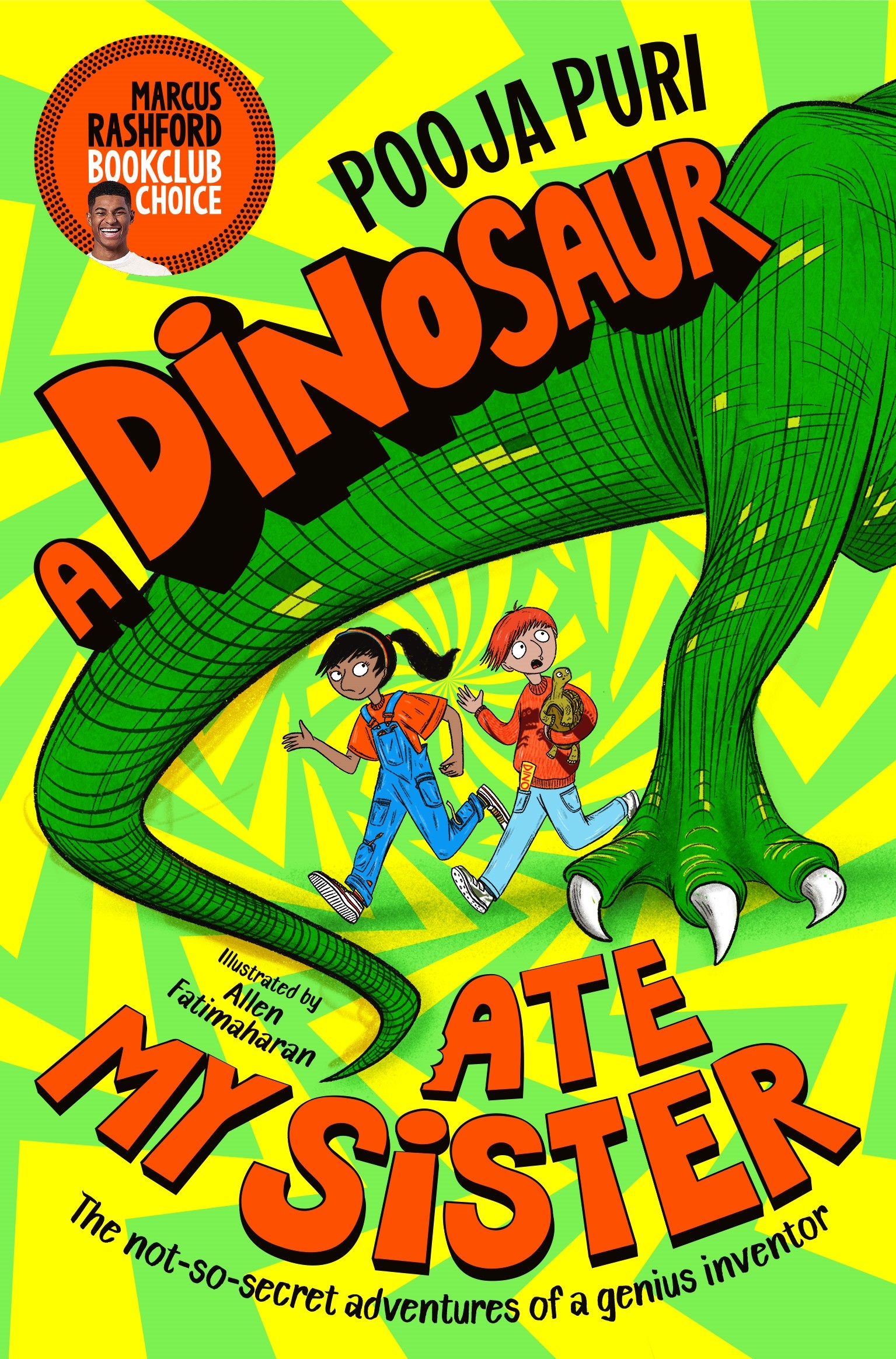
A Dinosaur Ate My Sister is out on 24th June.
Find out more about the Marcus Rashford Book Club.
- hello@peters.co.uk
- 0121 666 6646
- Send a message
- Meet the team
- Peters Ltd
- 120 Bromsgrove Street
- Birmingham
- B5 6RJ