GO
Sorry, but you already have a basket with that name. Please use something else.
Are you sure you wish to delete this basket?()
This action cannot be undone.
Sorry, something went wrong
Please report the problem here.
The art of browsing - Alison King
August 12th 2020
This guest post is from Alison King, Librarian, Literacy Lead and PSHE Coordinator at a small independent school in Cardiff and welsh judge for the Carnegie and Kate Greenaway Awards.
Browsing: (Verb) Survey of goods for sale in a leisurely or casual way.
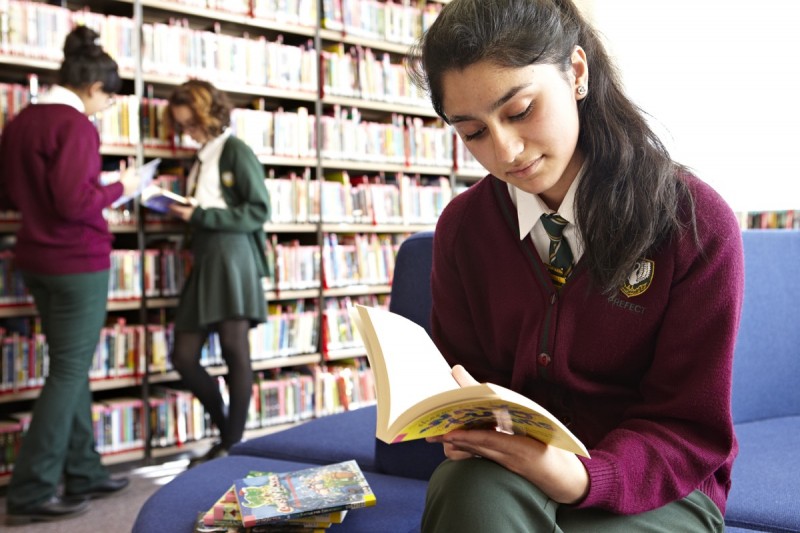
Browsing is as much a part of the reading process as consuming the words on the page. Think about your own reading habits for a moment; consider how much pleasure is derived from the act of choosing your book. Whether it’s lifted from a library shelf, a book shop display or a wobbly stack on your bedside table, selecting your next read is wonderful fun but also deeply personal. You are choosing your next adventure, determining how you will spend time outside of your own reality, who will accompany you, and where you will go. You are invested in your choice from the moment your decision is made and your relationship with that particular book has begun before you’ve even opened the cover.
As reading adults, browsing for books is something we do instinctively. Most of us don’t remember how or when we acquired the skill but most of us would accept it’s something that developed over time, evolving based on our relationship with and proximity to books, bookshops and of course, libraries. When children don’t have the browsing experience, it limits their choices and choice has long been championed as an important feature in creating lifelong readers.
It can be a daunting process for a number of reasons. Limited access to books at home or at school might mean that the sheer volume of titles on offer in a library seems particularly intense. If a child has been part of a reading scheme, the absence of easy identifiers like coloured bands or numerical levels can result in a lack of confidence and a reluctance to choose a title based on fear that their choice will be incorrect. Children who have yet to discover the joys of reading may not wish to engage in an environment populated by books. Browsing for books is an important skill, but with fewer children than ever having access to properly staffed school libraries, there is a risk that many will simply never be given the chance to learn.
So, what can we do?
- The first suggestion is the simplest and the most obvious: use your local library. Sign up together, get your library cards and create a sense of occasion around the whole experience. It’s a big event, so treat it with the reverence it deserves. Make time for weekly or fortnightly visits; build it into your weekend routine or plan to incorporate it one evening, after work and school. You’ll be amazed how quickly those trips will become a highlight. Nobody knows books like a children’s librarian, and they will be able to signpost different genres and authors as well as specific titles, encouraging children to explore the collection for themselves.
- Allow children to borrow as many titles as they can. It’s tempting to try and restrict them to one or two titles in the beginning but that creates a lot of pressure to get it right when you really want to use this time to teach children it is okay, necessary even, to get it wrong. Understanding what they don’t like is as important as understanding what they love. They’re bound to choose one or two titles that don’t really work for them, so a wider pool of choice increases their chances of finding something spectacular.
- Give them some space. This is important. Children need to feel like they have the freedom to choose for themselves, to get it right, to get it wrong and to engage in that process of discovering who they are as readers. If they’re aware of you watching them, they won’t be choosing for themselves, they’ll be choosing for you. This is hugely problematic because their reading journey will be shaped by the reader they think you want them to be and not the reader they actually are.
- Respect their decisions. Giving them space to choose titles that appeal to them is one thing. Allowing them to commit to their choices by checking out or purchasing the books they’ve selected is another. There’s potential to destroy a young reader’s relationship with books here, and that damage cannot always be repaired so if you’re struggling with their decision to read one type of book over another, think long and hard about why that might be.
- Remember that non-fiction, comic books, graphic novels, poetry, joke books, picture books, magazines and newspapers are all valid choices. They might not be what you would choose to read yourself and they may not conform to your idea of what constitutes meaningful reading material, but it’s helpful to remember that this is about the child’s reading journey, not yours.
Lead by example. The best way for children to learn to browse is to see you doing it and enjoying it.
Browsing for books is one of life’s simplest pleasures. It’s a wonderful way to explore the vast and varied world of books, a terrific reason to spend some quality time together, and a solid step towards becoming a lifelong reader, for whom the world becomes infinite.
Alison King is the Librarian, Literacy Lead and PSHE Coordinator at a small independent school in Cardiff. She is also the current welsh judge for the Carnegie And Kate Greenaway awards. She spends her days talking about books, promoting books, building things out of books and celebrating books. For book chat, recommendations and general literary musings, follow her on twitter @avk1986.
- hello@peters.co.uk
- 0121 666 6646
- Send a message
- Meet the team
- Peters Ltd
- 120 Bromsgrove Street
- Birmingham
- B5 6RJ