GO
Sorry, but you already have a basket with that name. Please use something else.
Are you sure you wish to delete this basket?()
This action cannot be undone.
Sorry, something went wrong
Please report the problem here.
Five questions for Joseph Coelho
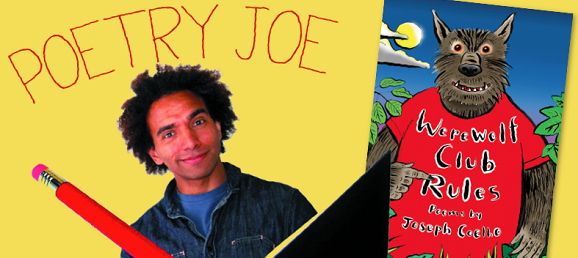
August 6th 2015
1) When did you start writing poetry and what inspired you? My earliest memory of writing a poem is from secondary school, in Year 8. I took part in a competition to write a poem. My poem was about a performing bear and was, I thought, cleverly entitled "Unbearable" - as was the poem. Later, when I was in sixth form the amazing poet Jean Binta Breeze came to visit; she read a poem about the softest touch to my class and I was hooked.
2) When you were younger, what did you want to be when you grew up – has it always been your dream to be a poet and performer? I was determined to become a Marine Biologist - I've always been drawn to water. It was either that or be a Palaeontologist. Somewhere along the line Archaeology took over. I studied Archaeology at UCL but was always writing poems and plays and directing and performing. During my final year I directed The Crucible at the Bloomsbury Theatre (when I really should have been writing my dissertation). The theatre world called and I answered, working both on and off stage and all the while developing my writing and performance skills. I wouldn't say being a poet and performer were a dream, it just sort of happened, for the longest time it felt like a job that someone else would do, not an option for me.
3) How do you think teachers can best get children to really engage with and enjoy poetry, in and out of the classroom? By ensuring they share their own genuine passion for poetry. Teachers should find a poem that moves them and then share that poem with their class and not be afraid of challenging students with "heavy" poems. More often than not I come across teachers in schools that are terrified of teaching poetry due to them having had negative experiences with poetry when they were young. It's essential to transcend those experiences and to see poetry for the accessible, creative, necessary art form that it is. Sure there are rules but there are also no rules, you can get a class to write a sonnet or to explore free verse or to write similes on post-it notes in the playground. Poetry can be as fun or as dull as you choose to make it. I have created a free resource of six creative, fun poetry sessions that have been tried and tested many times in the classroom - you can download these for free via DropBox here...
4) What’s your favourite book? Are you reading anything at the moment? My favourite book at present (it does tend to change quite a bit) is Skellig by David Almond - magic, mystery and heart; everything I love. I'm currently reading 100 Years of Solitude by Gabriel Garcia Marquez.
5) Which poem are you most proud of writing and why? "If All the World Were Paper": https://youtu.be/m5A67oy6P_8. It was a labour of love that went through many different forms before I settled on the final version. The biggest reason why I'm so proud of it is due to the impact it has on an audience; it is a poem that has often moved people to tears and I'm hugely grateful to share those moments with others. Thanks Joseph, and congratulations again on your win!
- hello@peters.co.uk
- 0121 666 6646
- Send a message
- Meet the team
- Peters Ltd
- 120 Bromsgrove Street
- Birmingham
- B5 6RJ