|

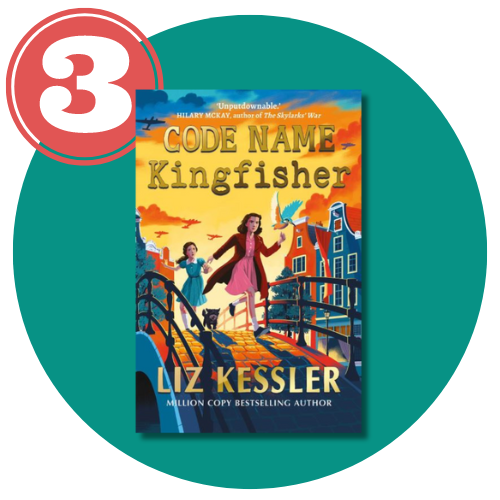
Jewish sisters Mila and Hannie are sent to live in a different city in Nazi-occupied Holland with new identities, with Hanna eventually joining the Dutch resistance.
“Full disclosure: I got an ‘E’ in my History ‘O’ level. So, for me, getting young people interested in the subject of WW2 isn’t about teaching history. It’s about finding the personal stories.
As an author, I am much more interested in individual characters and their personal journeys and experiences than in historical events. For me, reading about or teaching WW2 is about the people, rather than facts and figures, or dates and incidents. This would always be my starting point.
The other important thing is to make the stories relatable. Find ways to make the links between the events of WW2 and young people’s experiences today, so that you are not just teaching about a period in history, but about what could happen in the future, or might to some extent be happening in the present day.
My own interest in the subject is very personal. My dad and his parents were a Jewish family living in Austria when Hitler came to power. They only managed to escape to England because of an extraordinary moment of good fortune and the incredible kindness of an English couple. My dad’s story inspired my book, When The World Was Ours. During the research for that book, I came across a story about two sisters, Truus and Freddie Oversteegen, who, as teenage girls, joined the Dutch Resistance. I was so inspired by them that they became the inspiration for my latest book, Code Name Kingfisher. If either of these books can contribute to discussions about WW2 and to helping young people understand the issues more deeply, that is pretty much as good as it gets for an author.”
|