GO
Sorry, but you already have a basket with that name. Please use something else.
Are you sure you wish to delete this basket?()
This action cannot be undone.
Sorry, something went wrong
Please report the problem here.
Q&A: Yoto Kate Greenaway Medal winner Danica Novgorodoff
July 29th 2022
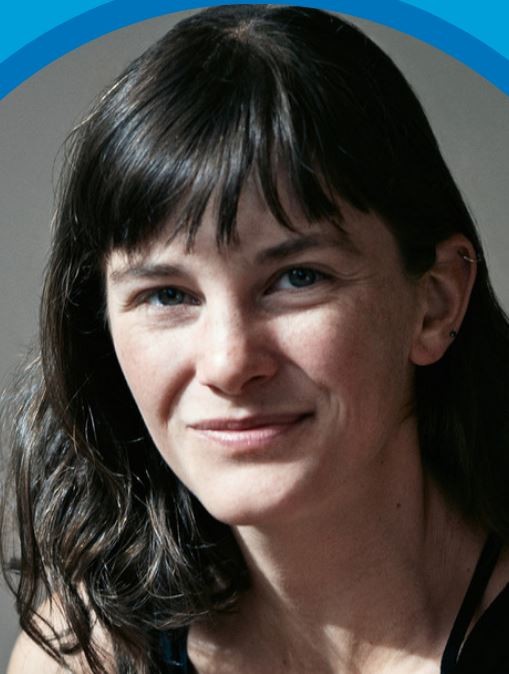 |
About Danica Novgorodoff Danica is an artist, writer, graphic designer, and horse wrangler from Louisville, Kentucky, currently living in Brooklyn, New York. Her books include A Late Freeze; Slow Storm; Refresh, Refresh (included in Best American Comics 2011); and The Undertaking of Lily Chen. |
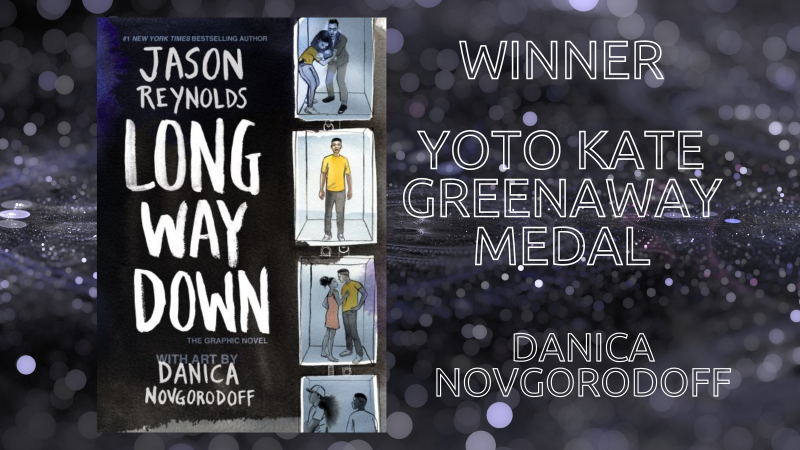
Marking the first time in 50 years that a graphic novel has won the Yoto Greenaway Medal, Danica Novgorodoff's stunning edition of Jason Reynold's Long Way Down shows the emotional response that illustrations can evoke. She tells us why, for some children, graphic novels can be a more engaging or accessible form of reading, and an entry point to learning to love books.
Q: Congratulations on your Yoto Kate Greenaway Medal win for Long Way Down! It’s the first time a graphic novel has won the Greenaway since 1973 – what does it mean to you to win?
A: It’s a wonderful affirmation of the value and power of graphic novels to move readers emotionally and intellectually. And for me, it’s a great honour to be recognised with this prestigious prize. I’m so grateful to the Yoto Greenaway judges and all the people who have supported my art over the years. I hope that the award will bring Jason Reynold’s powerful writing to more people.
Q: Your book is an illustrated edition of Jason Reynold’s Long Way Down, which was shortlisted for the Carnegie Medal in 2019. Can you tell us a bit about the creative process – how did you go about adapting the original book?
A: I started with Jason’s beautiful novel, which I adapted into a script format, rearranging the verse into panels, images and dialogue. I tried to keep the text and narrative as true to the original as possible, while using imagery to replace text wherever appropriate so that the images and text would not be redundant. Then I made character sketches and worked on developing a visual style for the book.
I created thumbnail sketches of every page, followed by more detailed sketches, and finally used ink and watercolour to create the final images. It’s a labour-intensive process with many steps, and it took me about two years to create the graphic novel. My favourite part is the final watercolours, because there’s more freedom and fluidity to the work at that stage.
Q: The book covers some very difficult but important themes, including gun violence and grief – did you find these tricky to explore?
A: The scenes depicting gun violence were very hard for me to draw—especially the ones showing young people being harmed. Gun violence is a true crisis, especially in the U.S. where I live, and it breaks my heart every time I hear about another shooting. It was impossible not to think about the deeply problematic conditions that make so much violence possible—the number of guns in the U.S. and the easy access people have to them, as well as racism, mass incarceration, inequality, and mental health issues.
In this book, I wanted to depict the devastating emotional impact that gun violence has on an individual person, and the disruption to entire family and community networks that so much loss and grief can cause. Each life lost is not simply a statistic, but a real person—in the case of this story, a son, a brother, and a friend.
Q: Were there specific ways in which you chose to convey or represent these themes through your uses of colour?
A: I chose a blueish grey color for the flashback scenes to evoke a ghostly feel, and to suggest the shadow cast on Will’s past because of the many losses he’s suffered due to gun violence. I also kept much of the rest of the artwork in a limited palette so that the blood reds in the violent scenes pop out.
Q: Graphic novels are increasingly popular with teens and younger readers. What are the benefits of this format for engaging with young people?
A: Young people grow up learning to read and recognize images long before they know how to read text, so pictures become part of their way of understanding the world from a very early age. For some children, graphic novels can be a more engaging or accessible form of reading than straight text, and an entry point to learning to love books. Graphic novels are also an exciting and versatile medium in themselves. They can incorporate any genre of narrative, from memoir to poetry, fantasy to nonfiction.
There are many ways to tell a story, and I think whatever inspires a young person to read should be welcomed.
Q: Are there any other illustrators or graphic novelists who inspire you?
A: There are countless illustrators and graphic novelists who inspire me! Sydney Smith, Shaun Tan, and Mariachiara Di Giorgio, who have also been nominated for or won this award, are illustrators I adore. A few of the graphic novelists I’m inspired by include Eleanor Davis, Mira Jacob, Alison Bechdel, Jerry Craft, Gipi, Nate Powell, Jillian Tamaki, Trung Le Nguyen, Vera Brosgol, Roz Chast, Dasha Tolstikova, and Kristen Radtke.
- hello@peters.co.uk
- 0121 666 6646
- Send a message
- Meet the team
- Peters Ltd
- 120 Bromsgrove Street
- Birmingham
- B5 6RJ