GO
Sorry, but you already have a basket with that name. Please use something else.
Are you sure you wish to delete this basket?()
This action cannot be undone.
Sorry, something went wrong
Please report the problem here.
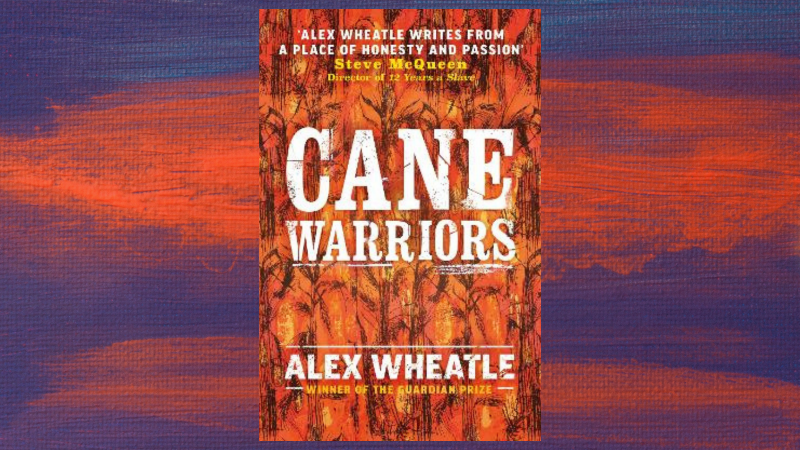
Cane Warriors Q&A with author Alex Wheatle
October 1st 2021
Q: Cane Warriors is based on a real-life slave uprising in 1760, Jamaica. How did you first hear about this story?
A: I first heard about the name of Tacky during a conversation with my mother. She grew up in the small town of Richmond in St Mary parish, Jamaica, which is adjacent to the Trinity and Frontier plantations. My mother recalls elders sometimes mentioning the legend of Tacky’s war and how their duppies (ghosts) of the Cane Warriors roamed the land.
Q: What inspired you to write your version of these events for a young adult readership?
A: When I attended school, I recall learning about the battle of Hastings, King Harold and how he lost his eye, the Spanish Armada, Henry the eighth and his six wives and other canonical topics of British history. There was an absence of any narrative from the Caribbean that related the existence of my ancestors or their lived experience. I had watched Roots when it was first broadcast on British television in the mid 1970s, and it affected me deeply. It was only when I moved to Brixton as a teenager that I first learned about Caribbean slave revolts. Reggae music was a gateway for me. I would listen to Bob Marley’s Slave Driver on a cassette tape in the late 1970s and Dennis Brown recorded his own version in the early 1980s. I guess writing Cane Warriors, I simply wanted to write a tale that brought me the excitement and sense of discovery when I found Bob Marley, Dennis Brown and so many other reggae artists.
The Black Jacobins by CLR James, was a huge reference point for me. It told the tale of the Haitian revolution. There is great scope and drama to be mined in Caribbean slave revolts and as a writer, I was surprised there are so few existing narratives, factual or fiction, that are published today. With Cane Warriors, I simply wanted to relate a tale that was denied me at school. Every student in the UK should be aware of what occurred in British colonial history. It’s not pretty but it’s essential they learn this aspect of world history.
Q: The language of the book will make a big impression on readers, as all the dialogue is in Patois. Why is language so important to the characters of Cane Warriors?
A: I wanted to capture the essence of the Cane Warriors and so I couldn’t compromise the way they spoke. Language is very important for a conquered people because when you have lost everything, the only thing you may have left is the remains of your mother’s tongue. For me, that is very important for the characters in Cane Warriors and still important today. I believe it adds to the identity of the enslaved peoples of the Caribbean.
Q: Jamaica and its landscape is almost like another character in this novel. How did you go about recreating it on the page?
A: I’ve visited Jamaica many times. When you first land at Kingston International airport, you cannot help but be struck by the stunning, spectacular landscape as you descend to land. It’s incredibly dramatic. That initial awe and wonder has stayed with me over the years. Cane Warriors is a novella but it was important for me to give a picture of the Jamaican landscape for the reader.
Q: Belief, music and culture features throughout Cane Warriors, as the newly-liberated people are for a time free to sing, live and worship their gods as their ancestors in West Africa did. What inspired the music, beliefs and stories that feature in this book?
A: I was encouraged by my editor, Chloe Sackur, to not hold back on belief systems, traditions and customs that the enslaved peoples had before they were taken to Africa. It’s crucial for the reader to understand that the enslaved peoples of the Caribbean had their own gods, belief systems, traditions and rituals that I believe are just as valid as any other belief system in the world. I wanted to bring the oral story-telling tradition of western Africa to Cane Warriors.
Q: Moa survives hardship of every kind – violence, hunger, deprivation and trauma. How do you get under the skin of a character facing the extremes of life?
A: I can only be informed by my own violence, hunger, deprivation and trauma as a reference point to relate to Moa’s tale. I didn’t want to sugarcoat Moa’s life in any way, for research informs me that as soon as a young boy was physically capable, he was sent into the fields to do a man’s work. It didn’t matter if you were eleven or fifteen. I cannot comprehend in my mind how someone of Moa’s age could go out into that field every morning, knowing he was likely to be whipped and flesh would be torn from his back. I can only hope my words help to do him justice.
Q: Brotherhood and family are strong themes in the novel. Were any of the relationships inspired by real life?
A: Of course, all families must work through their own ups and downs, disagreements, break-ups, celebrations, tested relationships and I guess my family and extended family is no different to any other. So, yes, much of the themes of my work are inspired by real life relationships and the frayed threads of lived experience.
Q: Cane Warriors looks at a very dark period of British colonial history, when the slave trade was a long way from abolition and many millions of Africans were being enslaved and brought to the Caribbean. There are still not that many books about this particular subject for young adults – do you feel writers are tackling issues related to it more now?
A: In past years/generations, I believe young adult writing was quite limited. Now, I am very much encouraged that authors are tacking social issues, race, gender topics, sexuality, bullying, belief systems and so many more aspects of what it is like being young in any corner of the world. I like to think that Oliver Twist or Great Expectations, if it was written today, would be considered young adult. Charles Dickens obviously had a great empathy for the poor of the Victorian age and so he wrote about that. When I choose to relate the story of a 14-year-old boy in 1760 Jamaica, I’m simply writing a tale that I feel incredibly passionate about. I possess the same drive and motivation to tell Moa’s tale as Dickens did to write his own fables. That’s why I believe Cane Warriors should never be relegated to the status of black interest but of world interest. It’s a universal story. Moa’s tale deserves to be told and read just as much as Oliver Twist, Ebeneezer Scrooge, those Little Women, The Great Gatsby or anyone else.
Q: What do you hope readers will take from Cane Warriors?
A: For young readers, or indeed, any reader, I really hope Cane Warriors gives them a greater understanding of the impact of slavery and its inhumane brutality in Jamaica. And throughout this evil of colonial repression, great heroes emerged that shouldn’t be forgotten.
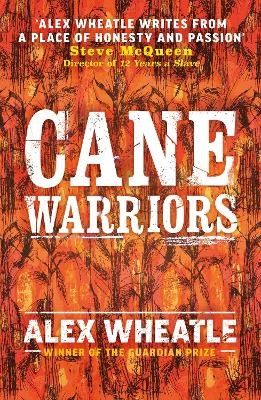
Cane Warriors is out now.
- hello@peters.co.uk
- 0121 666 6646
- Send a message
- Meet the team
- Peters Ltd
- 120 Bromsgrove Street
- Birmingham
- B5 6RJ