GO
Sorry, but you already have a basket with that name. Please use something else.
Are you sure you wish to delete this basket?()
This action cannot be undone.
Sorry, something went wrong
Please report the problem here.
10 ways to make your library more accessible to neurodivergent students
May 11th 2026
As a ‘third space’, the library is often very valuable to neurodivergent students. It is a place to unmask and relax within the school environment. Increasing the accessibility of your library can benefit these regular visitors, as well as encourage other neurodivergent teenagers to enjoy the school library. Natalie from our Schools Team shares 10 ways you can improve the accessibility of your library with neurodiverse needs in mind.
 |
Natalie | Children's Book Specialist Natalie joined Peters after working with Upper KS2 and KS3 children as a school librarian. Prior to this, she completed an MSc in Information and Library Management and worked at the University of Birmingham’s library for over 10 years. As part of our review team, Natalie has access to the full breadth of the children’s book market and reads everything from picture books to older teen fiction. In her downtime, she enjoys reading mysteries and light popular fiction. |
How to create a neurodivergent friendly library |
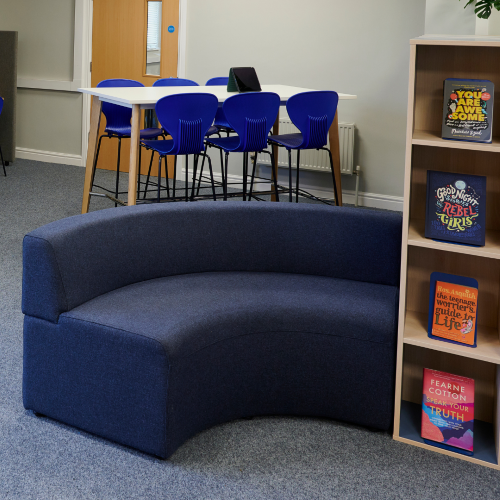
Create a welcoming environment within your library design1. Consider lighting. Do you have to use overhead strip lighting? Could lamps or fairy lights be used (at least during quiet reading sessions) to reduce the sensory impact? 2. Identify any noise issues in the library. This could be buzzing computer monitors, chatting from nearby classrooms, or hard floors that reflect noise. Is there anything you can do to mitigate this? 3. Create social and private reading areas. If you are able to provide a separate room for those experiencing sensory overload, that would be ideal, but space often does not permit this. Instead, is there a children's reading corner that could be made ‘softer’ with bean bag seating, sensory cushions, lower lighting and partitioning to reduce noise? 4. Provide sensory accessories for students. This could be a selection of fidget toys, lego, and coloured overlays for students to use, if budget allows. Sensory furniture such as touch tag beanbags and cordoroy and fleece cushions offer students similar tactile and visual stimulation and are ideal for those quieter library corners or sensory rooms.
Shelve books your students relate to5. Set up a ‘shelf help’ section with neuro-affirmative health and wellbeing titles which students can access. This makes titles easier for students to browse and borrow without having to ask. It also helps to counteract misinformation that students may pick up from other sources and empower them postively. 6. Provide disability positive books. This is probably the most important step in making all students feel welcome in the library. Ensure you have books with nuanced, multidimensional, and neurodivergent characters which students see themselves in. Peters reading recommendations for teen and YA books with neurodivergent protagonists:
Make library information clear and direct7. Put up signs to direct students around the library. This makes it clear to students where to check out or return books or where they can use a computer. Images as well as words will help. 8. Try to give as much as notice as possible if you have to make changes to how the library runs. For example, if the library has to close one lunchtime for a meeting. Again, provide information signs: in this example, post signs as to when the library will be open again. For many students, the library is a safe space, and not having access to it when they think they will may be distressing. Use online access to your advantage9. Promote the tasks you can do online via your library catalogue. These tasks include renewals or reservations, so that students can do these remotely. This not only reduces the need for interaction for students who find this difficult, but provides them with a way of looking things up in their own time. This will give them space to process the information. 10. Create a ‘walk-through story’ of how to use the library. A good example can be found here. It would also be useful to include photos of the library staff or student librarians, so students know who they can talk to if they need help.
|



Further support from the Peters team

Tips from our designers: how to create accessible and user-friendly libraries?
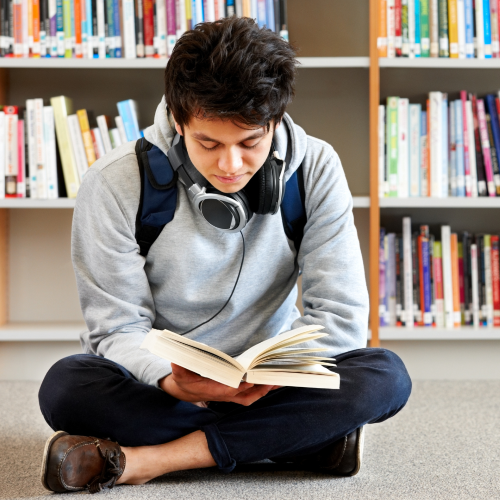
When designing secondary school libraries, always consider accessibility and how an interior can be made as user-friendly as possible to accommodate diverse and changing needs. For example, some students may prefer open spaces to read seated on the floor, while some may prefer privacy to independently read in cosy reading nooks.
You can create dynamic spaces for your students by zoning your library layout for several different functions: group reading, independent reading, table-work, 1-to-1 areas, etc.
A library for schools should also focus on the comfort and wellbeing of its users, accommodating to sensitivities. When choosing colour schemes for our designs, we always recommend a calming, complementary colour palette to create a focused atmosphere, perfect for reading.

To add depth and interest to the space, you can incorporate textured surfaces in upholstered seating, soft rugs, or tactile cushions, which enhance the feeling of comfort for its users, without overstimulating the senses. Even if you wish to add colour, do not forget that as soon as you display your book stock, this will add further visual interest which should be considered in your library colour scheme.
- Helena, Senior Interior Designer
How does Peters help support special schools and mainstream schools with SEND provision?
Our bespoke service for books and furniture caters for and supports your children and young people with promoting their literacy levels and development. Let us know your requirements and we can tailor book selections and library designs unique to your settings' needs.
- hello@peters.co.uk
- 0121 666 6646
- Send a message
- Meet the team
- Peters Ltd
- 120 Bromsgrove Street
- Birmingham
- B5 6RJ